Local Plan Review 2026-2043 Issues and Options Consultation
Shaping New Development
- This consultation has considered the implications of changes to national planning policy since the 2020 plan was drawn up, and therefore it has focussed on issues regarding the number of new dwellings to be provided in the Borough and options for how they can be accommodated. This section starts to explore some of the other key policy areas that will help shape new development, and whilst it does not provide detailed wording, it does seek to set out policy directions that ought to be taken forward. These are not set out in any priority order.
- In this context it is important to consider how policies in local plans will be influenced by National Decision-Making Policies being introduced through an updated NPPF. In particular the Government’s intension that “all plan makers should, in preparing plans … not duplicate, substantively restate or modify the content of national decision-making policies unless directed by other policies in this framework.”.
- It is also important to consider that a significant degree of work went into informing the draft policies that were included in the 2020 Local Plan Review. Subject to the content of the NDMPs and ongoing update of the local evidence base, these policies may still provide a solid platform from which to bring forward the new Local Plan. A schedule of these policies is set out in an appendix to this document.
- As the Council continues to bring forward a local plan, evidence base studies will be updated as appropriate. This will then provide an important evidential basis for determining the content and drafting of new/amended policies. Some of the issues explored below will need to take into account this new evidence as it is prepared. For instance, how housing mix and affordable housing will be addressed by new policy will be based on an updated Housing and Economic Development Needs Assessment (HEDNA). However, this issues and options consultation is an opportunity to seek stakeholders’ views so that when the Council does have the updated evidence available for future consultations it can put forward a preferred option that is based on stakeholders’ views and evidence.
Comprehensive Developments
- When the Call-for-Sites exercise was launched, the Council noted:
“Call-for-Sites submissions are often driven by the land that may be available that happens to be in a single ownership. This can create smaller more inward facing developments that may be poorly connected to, or isolated from, the settlement that they should be a part of.
To avoid this situation, it may be necessary to look beyond the potentially artificially created boundaries caused by historic ownership patterns and put forward a larger site that can take advantage of looking at an area more comprehensively. We encourage promotors to work with other landowners and promotors to ensure submissions are made on a comprehensive basis and welcome joint submissions.
If individual submissions are made in relation to parcels of land that the Council believe should be considered together or more comprehensively, or parcels of land that ought to be included are omitted, the Council will, early in the evaluation, identify which parcels should be considered on a joint and comprehensive basis. In these circumstances it will be expected that those submitting proposals will identify a lead promotor between themselves and all parties should agree to the principle of joint working. To assist this process the Council may share contact details with other promotors, and this should be borne in mind when completing the submission form.
For sites to reach the allocation stage, the Council will need to be satisfied that adequate arrangements are in place for sites with multiple ownership to ensure that they can be delivered on a comprehensive basis to avoid piecemeal development.
Evidence of joint working can include landowner/promotor agreement to a collaborative approach including, if necessary, an equalisation agreement that covers a comprehensive approach to infrastructure provision and mitigation delivery. Whilst this agreement is not necessary at the Call-for-Sites submission stage, it will be required before a site will be included as an allocation in a draft plan, and so we encourage site promotors to give early consideration to such matters.”
- This approach signalled the Council’s intent to maximise the links between various landowners and ensure the most efficient and effective delivery of sites. The Council considers this a key component of supporting infrastructure delivery and meeting both local and strategic needs. Where the Council identify the need for landowners to come together to produce a comprehensive approach it will require promoters to:
- Individually agree to the principle of joint working.
- Select a lead promotor/spokesperson/point of contact that the Council can liaise with.
- Agree that if the Council were to give an indication that the wider site may be included as an allocation in the emerging plan, that the parties will provide a signed memorandum of understanding between the parties that sets out the joint collaboration arrangements that will be followed.
- Such information will likely be key to demonstrating robust and deliverable site allocations as part of the plan making process.
Biodiversity Net Gain
- Biodiversity net gain (BNG[63]) is a way of creating and improving natural habitats. BNG makes sure development has a measurably positive impact (‘net gain’) on biodiversity, compared to what was there before development.
- In England, BNG is mandatory[64] and developers must deliver a BNG of 10%. This means a development will result in more or better quality natural habitat than there was before development.
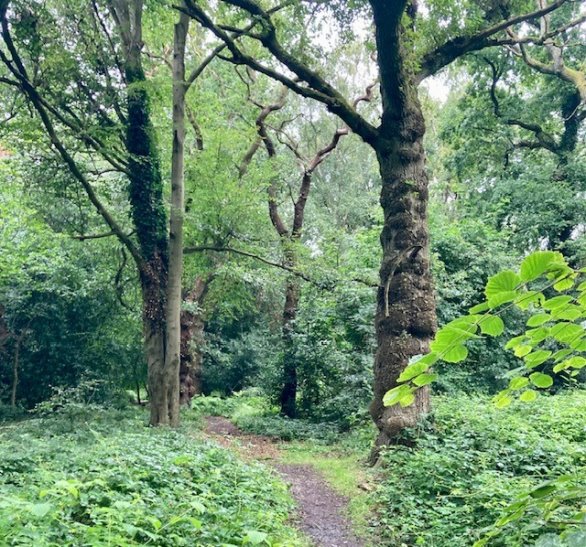
- The Council is keen to explore whether BNG should be extended to require a greater net gain, of for instance 15% or 20%, and what evidence may be required to justify this approach.
Housing Mix & Affordable Housing
- It is important that the right sort of housing is provided, both in terms of dwelling sizes that match the needs of the Borough’s residents; how young residents in particular can access housing; and how those in need of help can be accommodated.
- As noted earlier in this consultation, the Council will be updating its Housing and Economic Development Needs Assessment, and this will provide the evidence necessary to bring forward detailed policy in this area. However, in the meantime the Council would welcome stakeholders’ views on how to address housing mix and affordable housing requirements.
Housing Mix
- Housing mix will vary from some sites to others, particularly those in town centre locations and other urban locations that are particularly well served by public transport[65] (such as the NEC and Arden Cross) which may accommodate a greater proportion of apartments which means that other sites (on the edge of the urban area or rural settlements) are likely to have a greater proportion of dwellings.
- The 2020 plan was seeking (a Borough wide) provision of the following for market dwellings:
- 1 or 2 bedrooms – 30%.
- 3 bedrooms – 50%.
- 4 or more bedrooms – 20%.
- As part of the approach to housing mix it is appropriate to consider what role ‘starter homes[66]’ could play as part of the housing supply that will be provided. In this context the term starter homes cover smaller house types that although may still be available as market housing products[67] would be at a price and availability that would make them attractive to, amongst others, those purchasing a house for the first time.
Affordable Housing
- The NPPF states at paragraph 63 that the housing needed for different groups in the community “should be assessed and reflected in planning policies”. Paragraph 64 goes on to state “Where a need for affordable housing is identified, planning policies should specify the type of affordable housing required.” NPPF annex 2 defines affordable housing as
“Housing for sale or rent, for those whose needs are not met by the market (including housing that provides a subsidised route to home ownership and/or is for essential local workers); and which complies with one or more of the following definitions:”
- Social rent.
- Other affordable housing for rent.
- Discounted market sales housing.
- Other affordable routes to home ownership.
- The Council’s approach has been to secure a 40% contribution to affordable housing in the form of 65% social rent and 35% shared ownership.
- The Council will consider whether to encourage a different affordable housing product, especially one that could deliver smaller dwellings that would be attractive to those purchasing a property for the first time. This could be beneficial in locations where those leaving home have found it difficult to access a property in the communities they wish to remain and thus enjoy the support of family members.
First Homes Discounted Market Sales Housing
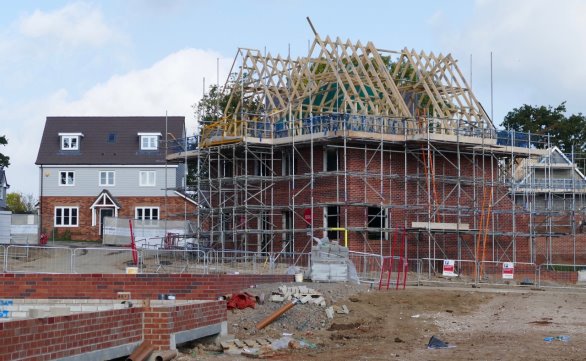
- ‘First Homes’ may be an affordable housing product that could fulfil this requirement and may be pursued instead of shared ownership. Key features of First Homes are as follows:
- Discount: A minimum of 30% discount off the market value is required, with the local authority able to set a higher minimum discount (up to 50%) to ensure affordability locally.
- Eligibility: Homes are sold to eligible first-time buyers and key workers, who must meet specific criteria including an income cap.
- Price cap: The first sale is capped at a maximum of £250,000 after the discount is applied. Lower caps can be set by local authorities.
- Perpetuity: The discount remains with the property and is passed on with every subsequent sale. A legal restriction is registered on the title at HM Land Registry to enforce this.
- Primary residence: The property must be the owner's sole or main residence.
- Planning requirement: Before the 2024 NPPF update, First Homes were required to form at least 25% of affordable housing units secured through developer contributions. This specific requirement is no longer in place, although First Homes can still be delivered through planning obligations.
- Discounted market sales housing is that sold at a discount of at least 20% below market value. Eligibility is determined with regard to local incomes and local house prices. Provisions should be in place to ensure housing remains at a discount for future eligible households.
- Whilst First Homes and Discounted Market Sales have some similarities, it is noted that there are more criteria that must be fulfilled for dwellings to be considered as First Homes. This may also have implications when subsequent onward sales of houses take place, and this could lead to an additional administrative burden to the Council.
- There is unlikely to be a need for both First Homes and Discounted Market Sales and so the Council is keen to hear views from stakeholders that if this sort of product is to be included as part of the affordable housing provision, which it should be.
- In considering this issue, it should be remembered that requiring affordable housing as a proportion of new developments will remain the principal way that such provision will be made. Furthermore, it will only be provided where new development takes place, which may not always be the same locations that give rise to such needs. Affordable housing will therefore remain a Borough wide issue, and this should include retaining a requirement for social rented accommodation for those in need who can’t afford to buy a property.
Level of Affordable Housing and its Split between Different Products
- Since the 2013 Solihull Local Plan, the Council has sought 40% of new housing on new developments to be affordable and has been pretty successful in achieving this level. The 2024 NPPF requires 50% of new housing on Green Belt sites to be provided if the Golden Rules of the NPPF are to be met.
- With potentially three different types of affordable housing being provided, this will have implications for the current 65% social rent/ 35% shared ownership split currently sought on developments and views are requested on what would be an appropriate split.
- It is acknowledged that final decisions on many of the affordable housing policies will need to be informed by an updated HEDNA, but in advance of this being available the Council is keen to hear stakeholders’ views at this stage.
Self & Custom Build
- Through the preparation of the 2020 plan, the Council consulted on what would be an appropriate approach to the delivery of self & custom build plots. The choices were to either require all sites over a threshold to provide a percentage of plots for self/custom build, or to concentrate plots on a small number of sites.
- Although response was mixed, it was judged that in the absence of a large enough site, or a small number of sites that could have accommodated the demand, that delivery was more certain by requiring a small number of plots to be provided on all sites over 100 dwellings. This has been the approach in applications that have come forward to date.
Climate Change
- The Council has an aspiration that the Borough is net zero by 2041[68] and how new development takes place has a role to play is achieving this ambition. Policy P9 – Mitigating and Adapting to Climate Change was the policy in the 2020 that sought to directly address the challenges of climate change. It included the following policy approaches:
- At a strategic level, measures to reduce carbon emissions and transition to a low carbon economy will be applied including: locating development where it minimises the need to travel, particularly by private vehicles; promote and attach significant weight to the installation of district, low carbon and renewable energy schemes and promoting connections to existing or planned district energy and/or heat networks.
- At a site level, applying the pursuing layouts (including orientation) and design that enhances natural ventilation and lighting and minimises the need for energy for heating and cooling, such as Passivhaus.
- For buildings, apply the ‘energy hierarchy’ focusing on a fabric-first approach to reduce energy demand for heating, lighting and cooling and minimise Greenhouse Gas emissions. This includes moving towards all new dwellings to be net zero carbon.
- Promoting renewable and low carbon energy for all residual energy needs and if necessary, once all other options have been exhausted, apply in setting and carbon offsetting schemes.
- Since the 2020 plan was drawn up, the Energy Act 2023 was enacted, and provides the powers for government to implement heat network zoning in England through regulations. Heat network zones are explained as follows[69]:
“Heat network zoning will fundamentally transform the development of new heat networks in towns and cities across England. By designating geographic zones where heat networks are expected to be the lowest cost solution for decarbonising heat, it will give local communities the tools to accelerate the development of heat networks and ensure that more homes and businesses can have access to greener, cheaper heat.
Through heat network zoning, certain types of buildings and low carbon heat sources can be required to connect to a network within a prescribed timeframe. By identifying, and ultimately connecting, the largest consumers of heat within a given area, a critical mass can be reached and provide the certainty needed to support long-term investment in heat networks.”
- It is anticipated that there will be heat network zone(s) designated in the Borough.
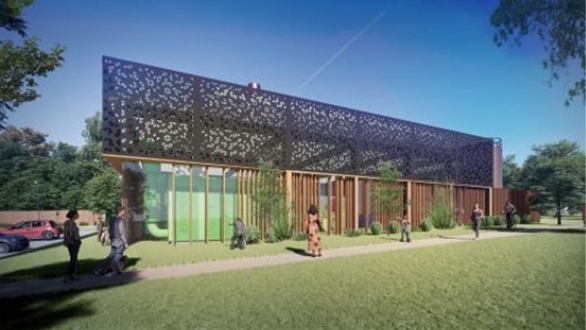
- In the meantime, the Council is working with partners to develop an innovative and reliable new district Energy Network that will deliver heat and hot water into the taps, radiators, and heating systems of connected town centre buildings. This Energy Network will provide low carbon heat and power (electricity) to a range of public and private sector customers within Solihull town centre, including Council owned buildings, education campuses and commercial offices.
49. Are the approaches set out in Policy P9 Mitigating and Adapting to Climate Change in the 2020 plan, still the correct ones to incorporate into local plan policy moving forward, or should any other approaches be followed?
[63] https://www.gov.uk/government/collections/biodiversity-net-gain
[64] Under Schedule 7A of the Town and Country Planning Act 1990 (as inserted by Schedule 14 of the Environment Act 2021)
[65] Either now or in the future.
[66] The terms starter home is not defined in the NPPF.
[67] As opposed to discounted market products which could fall within the definition of affordable housing (which is dealt with in the following section).
