Draft Submission Plan (Regulation 19)
Building a Strong Effective Economy Comment
215.Solihull has a strong and productive economy which is important to not only the Borough but also the wider West Midlands. It is home to a number of key economic assets including; Jaguar Land Rover, Birmingham Airport, and the National Exhibition Centre. Comment
216.The presence of these key economic assets combined with Solihull’s central location on the national motorway and rail networks and the quality of its environment, have been key to its success in attracting investment, particularly in high value-added sectors that include automotive manufacturing, ICT, business and professional services, creative industries and construction. Comment
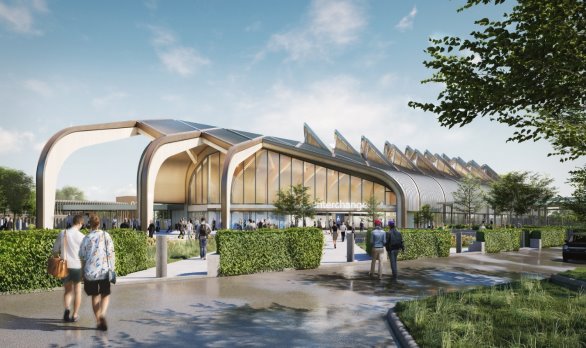
217.The completion of the HS2 high speed rail link and Interchange Station will significantly boost the attractiveness of the Borough to businesses and investors and present a major opportunity for growth. Comment
218.The Solihull Economic Strategy (2022 to 2032) recognises the Borough’s unique position and sets out a vision for Solihull to be the ‘UK’s best-connected economy – for business, for people, forever’. The local plan provides a framework to help support and deliver this vision. Comment
UK Central Solihull
219.The UK Central Solihull proposals present a unique opportunity on a nationally significant scale to bring forward major growth benefitting from the arrival of HS2 and the HS2 Interchange Station. The UK Central Hub area includes existing key economic assets and the development of the triangle of land bounded by the A45, A452 and the M42, known as Arden Cross including the HS2 interchange station. The proposals will contribute to wider strategic ambitions and in doing so make a substantial contribution to the economic growth aims of not just the Council, but also those of the West Midlands Combined Authority. It will also meet national objectives for achieving economic growth. Comment
220.The UKC Masterplan (June 2013) was one of the first instances that highlighted the opportunity as follows: Comment
“At the heart of the proposition is the notion that, by capitalising on one of the strongest economic bases in the country today, the area has the potential to underpin a national economic resurgence. By targeting investment in local infrastructure and committing to deliver an expanded Airport and proposed HS2 station, the benefits for the area and the UK are not only startlingly significant but also very exciting at a time when the country is moving out of one of the worst economic cycles in modern history.”
221.Now that the area’s potential has been recognised, it is important that every opportunity is taken to ensure that the vision is realised. To help achieve this an appropriate planning framework is needed that can encourage, guide and facilitate development to take place in a managed and coordinated manner. The approach of this Local Plan recognises that delivery of the area’s full potential will take place over many years, and it must remain flexible to ensure that no future opportunities are lost. Comment
222.In 2016 the Council established the UK Central Urban Growth Company (UGC) to lead the delivery of the project. The UGC brought together the key stakeholders from the Hub area to develop a Framework Plan (2018) that illustrates the key components and growth aspirations of the partners, together with an indication of the infrastructure needed to support delivery of the project. The Hub Growth and Infrastructure Plan (2019) sets out the vision for the UK Central Solihull Hub Area: Comment
‘The opportunity at the Hub is unlike any other in the UK; it benefits from a combination of factors that no other national proposal, either in place or planned, can compete with. It is unrivalled in terms of the scale of the development proposals, the infrastructure investment, the proximity to major conurbations’.
223.The UGC led the early work on the realisation of the Hub’s potential which continues to be driven forward by the Council together with key stakeholders and at a regional level by the WMCA. Comment
224.The UK Central Hub is identified within the Solihull Economic Strategy as a key project to deliver the priorities for regeneration and economic growth and the creation of thriving places across the Borough. Comment
225.The WMCA have set out regional objectives for growth and delivery of these which identify the UK Central area and its components as key drivers of economic growth. Comment
226.The West Midlands Futures Green Paper (2024) is an overarching plan which sets out areas of change in the West Midlands and highlights several regionally significant sites. These include the new HS2 stations, growth zone sites, and opportunities along priority corridors, including between the two HS2 stations through East Birmingham and North Solihull. Comment
227.The West Midlands Strategic Growth Plan (July 2025) highlights a series of corridors and zones key for economic growth including the UK Central Gateway which connects East Birmingham to the UK Central Hub in Solihull. Comment
228.The West Midlands SDS is being prepared which will provide a spatial representation of the Growth Plan and include broad locations for housing and employment growth. It is anticipated that the UK Central Solihull proposals will be a significant driver of economic growth as part of this strategy. The Council has been working with local authorities across the region and the WMCA to bring this forward. Comment
229.The Council Plan 2025 to 2030 sets out an ambition for delivering a vibrant economy with increased access to opportunities through economic opportunities relating to the UK Central area. Comment
230.It is clear that the Hub area embraces a unique concentration of economic assets and potential which holds out the prospect of making a significant contribution to the Government’s aims for job creation and growth. It supports national policy objectives of building a strong competitive economy (Para 85 NPPF). This plan sets out a policy approach to ensure these growth opportunities are maximised whilst providing a framework to ensure that the resulting developments provide a well-integrated sense of place, with easy access through the area, and is supported by appropriate infrastructure (including GI). The focus of the policy is to ensure these existing, new and expanded assets work together as part of a whole. Comment
Policy SMBC/E1: UK Central Solihull Hub Area Comment
- The UK Central Hub Area offers the greatest potential for growth in the Borough and includes a major, strategic mixed-use site at Arden Cross which will deliver significant employment and residential development, both during and beyond the Plan period; and will make a significant contribution to the wider West Midlands economy.
- The Hub Area, indicated on the Policies Map, includes Birmingham Airport, the National Exhibition Centre (NEC), Birmingham Business Park and Jaguar Land Rover, each of which are key economic assets in their own right. This Plan seeks to support the future aspirations of the key economic assets in a holistic, well-connected way, and to bring forward development of the area surrounding the HS2 Interchange Station at Arden Cross.
- Development proposals within the Hub will be expected to demonstrate how they achieve the following key objectives:
- Contribute towards sustainable and inclusive economic growth, the continued success of the key economic assets, and Solihull’s attractiveness to investment in high value-added activities, including low carbon technologies and services;
- Maximise connectivity within and beyond the site through integrated movement and transport networks (including sustainable and active modes of travel), capitalising on the infrastructure advantages of the location with its major new transport hub; and contribute to and co-ordinate transport, energy, power and digital infrastructure provision;
- Do not impede the provision of infrastructure necessary to support development elsewhere in the Hub Area, or otherwise prevent or hinder development occurring in other parts of the Hub Area;
- Encourages the use of modes of travel other than the private car
- Deliver a high quality, strategic green and blue infrastructure network across the Hub area to enhance natural assets;
- Create distinct and unique places with a strong sense of identity, incorporating high-quality design and innovation for development and the public realm, whilst maximising the efficient use of land;
- Support economic growth by supporting employment and supply chain opportunities that benefit businesses and residents across the Borough, and by supporting vibrant and sustainable communities, with an emphasis on health and wellbeing, including those working, living in and visiting the Hub Area and;
- Encompasses sustainability principles, minimising the use of natural resources and maximising low (zero) carbon and renewable energy principles.
Justification
231.The policy reflects the Government’s commitment, as set out in the NPPF, to securing sustainable economic growth in order to create jobs and prosperity, building on the area’s strengths and meeting the challenges of global competition and a low carbon future. Comment
232.Solihull benefits from having a prosperous and productive economy, with its advantageous location at the hub of the national motorway network, international connectivity via Birmingham Airport, and the presence of a number of key economic assets that contribute to employment and wealth creation for the Borough and Region. The arrival of the High Speed 2 rail link within the Plan period, and the development of the Interchange Station at Arden Cross present a unique opportunity for growth to be boosted through development within the UK Central Solihull Hub. Comment
233.The policy sets out the key objectives that development will be expected to contribute towards, including sustainable and inclusive economic growth. Growth that is inclusive should demonstrate that the benefits will accrue to all by building on the strengths of communities, ensuring that wealth is more evenly spread and enabling everyone to contribute and participate. Comment
UK Central Solihull Hub Area
234.UK Central Solihull encompasses the main growth areas in the Borough; Blythe Valley Business Park, North Solihull, the Solihull Town Centre, and the UK Central Solihull Hub Area. This policy focusses on the UK Central Solihull Hub Area, which, as a result of the High Speed 2 rail Interchange Station, offers the greatest potential for economic growth in the Borough, and recognises the added value that co-ordinating growth aspirations can bring. Comment
235.The Hub Growth and Infrastructure Plan (2018) sets out a vision for the development of a globally renowned business, leisure and entertainment destination providing opportunities to live, work and play as well as a major economic driver for the Borough. The objectives in the HGIP have informed the key objectives in this policy. Comment
236.The Hub Framework Plan (2018) shows how sustained growth could potentially be delivered up to 2047. It estimated up to 77,500 jobs in total over that period, with over 130,000 sqm of office floorspace, 225,000 sqm of industrial floorspace, 90,000 sqm of retail and leisure floorspace and 18,000 sqm of hotel floorspace by 2033. Up to 4,000 new homes could be provided up to 2047, with about 1,000 delivered by 2033. The Hub Framework Plan is a non-statutory plan which will be updated from time to time in response to changing circumstances. Comment
237.The Hub Growth and Infrastructure Vision (2019)20 sets out the vision to create Europe’s best-connected destination for business, leisure and living and a new outstanding gateway to the UK. Significant additional work has been undertaken over recent years, including updated illustrative masterplans, and design and business case development for key elements of supporting infrastructure. The need for flexibility is important given the time-period over which development is expected to come forward in the area. Comment
238.The Council will expect those promoting development via planning applications to demonstrate, in greater detail, how the criteria in this policy have been met, and to use guidance from overarching strategic documents for the Hub to inform proposals. Comment
239.It is recognised that given the time span for development to be undertaken, and the uncertainties about what may take place in the later years, there needs to be an increased emphasis on monitoring what does come forward, and what the implications are for the plan. Comment
240.Adjacent to the Airport and the NEC is the rail interchange site that serves Birmingham International Station. The APM connecting the HS2 Interchange Station and Birmingham Airport passes through the site and will form an important connection as work continues on redesigning Birmingham International Station into a multi-modal transport exchange providing seamless connections to the new HS2 Interchange Station, Birmingham Airport and the NEC. The Council considers that the site plays a significant role because of its important transport interchange purpose but ancillary or complementary facilities for Interchange, Airport or NEC purposes should be allowed provided they are justified and do not prejudice the use of the site for commuter parking serving the railway station. Development of any land within the site that can be clearly demonstrated as surplus to any of these requirements will be allowed provided that it does not conflict with other policies of this local plan or policies of the National Planning Policy Framework. Comment
Policy SMBC/E2: Arden Cross Comment
- The Council will support and encourage the development of the Arden Cross land as the location of an exemplary high speed rail station, with new public realm that contributes to the creation of a sense of place supporting the potential for commercial, residential and other opportunities, that will be well integrated into the surrounding environment, seamlessly linking to Birmingham Airport and the NEC in a well-coordinated way.
- The Council will support proposals that include offices, and residential together with associated ancillary uses (including retail, leisure and hotel developments of an appropriate scale) and education-based uses.
- Land bounded by the M42, A452 and A45, as shown as Site UK1 on the Policies Map, will be released from the Green Belt to accommodate new development that will capitalise on the unique opportunity presented by the UK Central Solihull Hub Area. The exceptional circumstances justifying the removal of the land from the Green Belt are set out in the justification to this policy
- It will be expected that proposals for development of the area will be promoted in a comprehensive and coordinated manner, taking account of overarching strategic guidance and plans for the UK Central Hub developed to inform detailed proposals and phasing and that will realise the potential the wider UK Central Solihull area.
Arden Cross
241.The Arden Cross proposals focus on the HS2 Interchange Station and the triangle of land east of the NEC bounded by the A45, A452 and M42 (some 140ha in area) and present an important and unique opportunity to maximise economic and social benefits. The High Speed 2 rail line bisects the site from north to south. As well as the station, the proposals include an Automated People Mover connecting to the NEC, Airport and Birmingham International station, a bus station and surface car parking for 7,500 vehicles[33]. The HS2 Base Scheme would have urbanised a substantial proportion of the site, significantly impacting on its contribution to the purposes of including land in the Green Belt. It would fail to realise the potential of the substantial economic and social benefits associated with growth around the transport hub, contrary to Government policy. Comment
242.Several site-level masterplans for the Arden Cross area have been produced since the UKC Masterplan (2013), which demonstrate that the site can make a significant contribution to economic growth. The 2020 masterplan vision featured a number of urban quarters, comprising a residential community with up to 3,000 new homes, an innovation district for employment and higher education, a transportation hub plaza incorporating leisure, retail and cultural attractions with office accommodation, together with a key movement corridor, a parkland area based on the Holywell Brook, based on sustainable transport principles. Comment
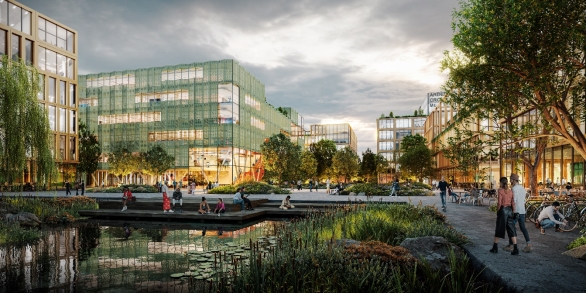
243.Muse have been appointed by the consortium of landowners bringing forward the Arden Cross land to develop a new masterplan to guide the future development of the site. They are working in collaboration with the Council and key stakeholders to develop a public private and academic partnership to include the University of Warwick, the NHS, Birmingham City Council, West Midlands Combined Authority, The Department for Transport as well as industrial partners. Comment
244.Proposals for the site are being prepared in collaboration with these partners to bring forward future proposals for the site including the potential for a unique HealthTech Campus. The proposals are described as a £3.2bn opportunity to drive substantial growth across the West Midlands and the national economy. It has the potential to accommodate 400,000 to 600,000 sqm of commercial floorspace including an innovation district, anchored by the University of Warwick HealthTech Campus, consisting of office, R&D, industrial and warehousing, alongside leisure, retail and hotel. Comment
245.The Department for Transport has confirmed that land around the HS2 interchange station will be available from 2030 to allow commercial development to come forward. This reflects a collaborative approach between HS2, the Department for Transport, and delivery partners to unlock development opportunities around the Interchange Station and accelerate long-term growth. Confirmed land release and the consolidation of land required for car parking will maximise the regeneration potential of Arden Cross. Comment
246.The Arden Cross proposals require land to be taken from the Green Belt. The exceptional circumstances to justify this approach are as follows: Comment
- The proposals are vitally important to the aim of maximising the economic growth and job creation potential of the Hub Area that is of national significance and will meet the NPPF aim to proactively promote economic growth;
- The need to capitalise on the arrival of the High Speed 2 rail station at Arden Cross by maximising the substantial national infrastructure investment at this location;
- Stimulus to local, regional and national growth to support the UK economy, and accommodate growth for the wider West Midlands;
- Significant socio-economic advantages, including additional housing to meet local housing needs, the generation of high skilled jobs, increased GVA output and the agglomeration affect at the key economic assets that make up the Hub area;
- Improved access to employment from East Birmingham and North Solihull, an area of persistently high unemployment;
- The multiple locational advantages of the area with its unrivalled transport facilities make this one of the most sustainable locations for growth in the Borough;
- The land is lower performing in the Solihull Green Belt Assessment 2026
- The importance of maximising the efficient use of the Arden Cross land that would not have been possible if the land were not removed from the Green Belt and the HS2 base case developed instead;
- The proposals are site specific in that they rely on the development of HS2 and its interchange station that will be built in the Green Belt and will address the needs of key economic assets that are of crucial significance to the local and regional economy;
- There are no similar opportunities for growth on this scale outside the Green Belt; and
- The land will be bounded by main roads that provide strong defensible Green Belt boundaries and minimises the impact on the Meriden Gap.
247.There are therefore exceptional circumstances for releasing Site UK1 defined in this plan from the Green Belt. Comment
Policy SMBC/E3: National Exhibition Centre (NEC) Comment
- To enable the NEC to meet its future aspirations and to drive economic and employment growth, the Council will enable a broad range of developments to enhance the visitor offer, diversify facilities and increase international competitiveness.
- The Council will support and encourage development needed for operational purposes, such as new or refurbished exhibition halls, transport facilities and other development needed to enable the NEC to enhance its international competitiveness.
- The Council will also support a broad range of ancillary and complementary facilities needed to enhance visitor experience and support operational needs. These will include hotels, administrative offices, warehouses, catering, meeting space, appropriate leisure and entertainment facilities and other supporting development, provided it is justified in terms of scale, its support for the NEC as a whole, and is appropriately located within the NEC.
- The Council will also support development proposals where it can be demonstrated that efficient use can be made of the NEC site and that these contribute towards wider placemaking objectives.
- The Council will support employment led development including industrial and logistics uses where it accords with the other policies of this Plan and the NPPF.
- The provision of new residential development within the NEC campus will be supported in principle where it accords with the other policies of this Plan and the NPPF.
- Any redevelopment proposals which would result in the loss of car parking for alternative uses should be supported by a parking review to justify the loss of spaces.
National Exhibition Centre
248.The role of the National Exhibition Centre has evolved since opening in 1976. The NEC is now acknowledged as a nationally significant economic asset as a venue for major exhibitions, events, tourism and leisure and an important driver of the visitor economy. The campus attracts more than 7million visitors per annum, supports thousands of direct and indirect jobs and generates £2billion per year in wider economic impact. Comment
249.In order for the NEC to remain competitive in a market where key competitors are international it will need to respond to changing markets and expectation and provide an improved offer. The NEC aspires to maintain its competitive position in the market for hosting major events but also intends to widen its product offer to encompass a wide range of major leisure and entertainment uses. The NEC aims to fulfil its ambitions by: Comment
- Maximising commercial opportunities of current footfall through enhanced activities to increase dwell time at the NEC site;
- Creating new footfall by introducing new facilities as an attractor to the NEC;
- Providing a more compelling sense of arrival to the Region;
- Increasing reputation and brand of the NEC and the Region through partnerships;
- Providing a site that has appeal across ages, cultures and social types.
- Redevelopment of land currently constituting the Northern car parks
- Potential redevelopment opportunities at the Central campus
250.This will require new investment to refurbish or replace halls, create new floorspace and meet new challenges in meeting visitor expectations and on-site experiences including improved visitor management, upgraded choice in its food offer and greater opportunities for relaxation and entertainment. Comment
251.The NEC are developing proposals for employment led regeneration of underused car parking (northern car parks) for the development of an Industrial and Logistics Hub. There is a need for flexibility to enable a broad range of development that will support operational needs but also a need for ancillary and complementary supporting facilities together with provision for sustainable transport and links to employment opportunities. Comment
252.Any opportunities for residential development at the NEC campus will continue to be supported in principle so long as they accord with other plan policies (locally and nationally). Such uses would benefit from the highly accessible nature of the campus (especially for public transport) and access to services and facilities within the campus and planned for neighbouring sites Comment
253.Developments at the NEC will play a key part in the place-making role that is expected across the Hub Area, especially given its position between the Airport and Arden Cross. Any development at the NEC Campus will be expected to retain and enhance the existing plantation as part of delivering Biodiversity Net Gain. Comment
Policy SMBC/E4: Birmingham Airport Comment
- The Council will support and encourage the continued sustainable growth and development of Birmingham Airport as a key component of national aviation infrastructure, the principal international gateway to the region and as a key component of the UK Central Hub. The Council will support further development needed for operational purposes, such as passenger and freight facilities, terminals, apron and airfield infrastructure, transport infrastructure and surface access facilities and other development that supports operational needs, makes efficient use of land and which allows the capacity of the extended runway to be maximised.
- The Council will also support a broad range of ancillary and complementary facilities including hotels, administrative offices, car parks, surface access facilities and other appropriate development required to support the operation and sustainable growth of the Airport and/or serve the needs of air travellers using the Airport. Proposals should be justified in terms of scale and in terms of supporting the Airport function, make efficient use of land and be appropriately located so as not to detract from Airport function
- Where justified, development for Airport- related uses beyond the Airport boundary will be permitted, providing that it accords with other policies in the Plan, including Green Belt policy (if applicable). This could include opportunities within the allocated employment site (UK2).
Birmingham Airport
254.The UK Aviation Policy Framework (2013) and the Future of UK Aviation: Making the best use of existing runways (2018) place a renewed emphasis on making the best use of airport runways and airport capacity. The most recent Airport Master Plan (2018) forecasts that passenger related air transport movement will grow substantially over the plan period (2018 throughput 13m passengers/year, 2033 throughput 18m passengers/year). The Master Plan also sets out a higher growth scenario for up to 24m passengers/year, and either scenario can be delivered off a single runway, in line with Government policy. Forecasts for airport activity and its continuing development indicate a strong market for new investment as evidenced by the extension to the main runway that was completed in 2014. The airport is currently undertaking work on a new masterplan, expected to be published in 2026. This will continue to forecast significant growth for the airport and explore options for further development to support that growth. Comment
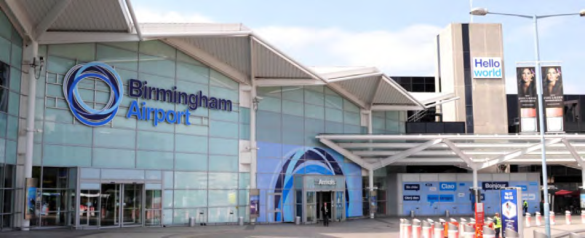
255.In order to enable the Airport to meet its aspirations a variety of operational development will be required as well as ancillary and complementary developments to serve the needs of travelling passengers. Appropriate types of development are described in this policy. Comment
256.The Airport has indicated that there will be a need for more land for ancillary facilities as set out in the policy beyond the Airport area. The Council considers it is appropriate that the airport should be supported to maximise the capacity and capability of the existing extended runway, by accommodating such ancillary facilities outside the airport boundary. This policy provides a framework for responding to this need within the plan period if necessary. The Council would expect any proposals to be set out and justified in a comprehensive masterplan with a view to making the most efficient and effective use of land and to support economic growth of the Borough and wider region. Comment
Policy SMBC/E5: Jaguar Land Rover (JLR) Comment
- The Council will support JLR to compete and further its success in the global vehicles industry. To achieve this, the JLR site will need to continue to evolve and where necessary expand.
- The Council will support and encourage the development of JLR within its boundary defined in this Local Plan. This will include a broad range of development needed to maintain or enhance the function of JLR as a major manufacturer of vehicles.
- Site UK2 on the Policies Map, is being released from the Green Belt to accommodate the Borough’s employment development needs and this includes the operational needs of JLR (both directly and indirectly through their component suppliers) which requires a location close to the existing plant.
Jaguar Land Rover (JLR)
257.The Council will continue to support the further development and modernisation of the vehicle plant in order to enable its continued success in the competitive global vehicles market. JLR is constrained in terms of its ability to expand by its location within the main urban area. To reflect this and having regard to the vital importance of JLR to the region’s economy and to job creation, Policy SMBC/UK2 includes proposals to remove land at Damson Parkway from the Green Belt to support this aim, which at least in part reflects the existing position as development to support JLR operations has already taken place in the Green Belt adjacent to the plant. Comment
258.In addition to meeting JLR needs, this land will provide for local employment opportunities to meet employment needs identified in the HEDNA, as well as for potential ancillary requirements for Birmingham Airport. Comment
Policy SMBC/E6: Birmingham Business Park Comment
- The Council will support and encourage the development of Birmingham Business Park within its boundary defined in this Local Plan to support its role as a prime employment location and enhance its important role as a high quality, managed business park.
- Development will be supported that includes offices, light industrial, general industrial and warehousing uses. The Council will expect development to progress in a well-planned way that will maintain the attractiveness of the business park to investors, and that will protect and enhance the environment including the natural environment.
- The Council will also support a broad range of ancillary or complementary uses needed to enhance the attraction of the business park to occupiers. These could include hotels and commercial/business/service uses of a scale that does not compete with existing or planned facilities outside of Birmingham Business Park.
Birmingham Business Park
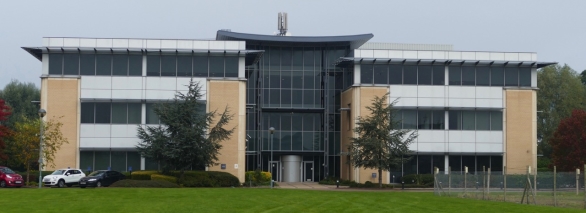
259.Birmingham Business Park has an important role in the Borough’s economy providing high-quality employment premises. The original Business Park was supplemented by a 9ha allocation in the SLP (2013) - site 31 located to the southwest corner of the business park. This was intended to supplement the land offer of the business park and potentially accelerate the delivery of new employment opportunities and enable stronger links to North Solihull, especially by public transport. The Business Park will continue to occupy an important role as part of the wider UK Central Solihull Area. Comment
260.A buffer zone of green space was retained between the business park and the residential development along Coleshill Road and Blackfirs Lane. This buffer, together with that existing to the northwest of the business park, is to be positively managed and enhanced. This would facilitate public transport access to the site from North Solihull via a new bus link into the business park from Blackfirs Lane that would also link to the National Exhibition Centre. Comment
Provision of land for Employment
261.Building a strong and competitive economy is a key principle of National Planning Policy set out in Chapter 6 of the NPPF (2024) and Chapter 7 of the updated NPPF (2026). Comment
262.In the NPPF (2024) paragraph 85 is clear that planning policies should help create the conditions in which businesses can invest, expand and adapt' Comment
263.Paragraph 86 sets out that planning policies should set out a clear economic vision and strategy which positively and proactively encourages sustainable economic growth. This should give regard to the UK Industrial Strategy as well as local and strategic strategies for economic development and regeneration. Comment
264.Policies should ‘set criteria, or identify strategic sites, for local and inward investment to match the strategy and to meet anticipated needs over the plan period’. Regard should be given to facilitating development to meet the needs of a modern economy, and identifying locations for uses. Potential barriers to development such as infrastructure should be identified. Comment
NPPF Approach to building a strong, effective economy.
265.Policy E1 of the updated NPPF (August 2026) builds on this approach setting out how development plans should support business investment and employment. It states that plans should take into account local business needs and wider needs and opportunities for economic growth, market signals and priority places for key sectors in the Industrial Strategy and the location of industrial zones. Plans should allocate sites to implement the economic vision and strategy and meet anticipated needs over the plan period taking account of the needs of the economy, and Comment
- clusters, networks and sites and locations for specific uses such as knowledge and data driven and high technology industries.
- Freight and logistics operations at a variety of scales and in suitably accessible locations.
- The expansion or modernisation of other businesses of local, regional or national importance to support economic growth and resilience. There should be flexibility to respond to future needs.
266.National decision-making policies E2 to E4 set out a national policy framework for supporting economic growth proposals. Policy E2 sets out criteria to support business growth and meet the need for business land and premises. National policy for freight and logistics is set out in Policy E3. Policy E4 supports the sustainable growth of businesses in rural areas. Comment
Solihull Economy
267.The Borough enters the plan period from a position of economic strength. The economy within the Borough is supported by high levels of economic activity and comparatively low economic inactivity, strong resident earnings and a skilled workforce and productivity levels above the West Midlands average and broadly comparable with the UK average. Comment
268.Solihull’s economic growth exceeded the regional and national rate from 2016 onwards and since 2020 the economy in Solihull has grown by 13% in line with West Midlands and England. Five sectors account for 78% of value added within the Solihull economy; professional and other private services, manufacturing, public services, finance and Insurance and construction. Comment
269.In terms of growth in jobs Solihull’s total employment grew by 13% over the last two decades with the last decade being particularly strong. Comment
Policy SMBC/E7: Provision of Land for Employment Comment
- To ensure sustainable economic growth and to meet the Borough’s local employment land needs during the plan period 2026 to 2043 provision will be made to accommodate the following:
- Up to 60.1 ha (gross) of industrial and warehousing land
- 6.8 ha (gross) of office land
- The table below identifies the strategic sites which comprise the Council’s supply of main employment land for this purpose, the Council will continue to monitor the supply to ensure the need is met throughout the plan period and to avoid unnecessary release of further Green Belt land. The Council expects non allocated sites to come forward during the Plan period which will provide a range of employment land and premises. The Council also expects the UK Central Solihull sites to contribute towards the delivery of strategic employment land.
- The Council will support the allocated sites set out in the table for employment purposes. Small-scale supporting facilities may be allowed where needed to specifically enhance or complement business use in the particular business locality and are compatible with sustainable development principles
- To ensure that an adequate supply of land remains available for employment purposes, sites will be protected for their allocated purposes.
- Non-allocated employment sites will also be protected for employment use (offices, industrial and warehousing). Alternative uses may be allowed where the following criteria are met:
- The site is relatively isolated from other business premises or is out of place in the context of other neighbouring uses, such as residential; or
- It is clearly demonstrated that there is no longer a need to retain the site for its intended business class purpose; or
- In the case of vacant premises, there is no longer a reasonable prospect of attracting business development in market terms;
- The alternative use will support sustainable development principles and will directly support employment locally;
- There is no conflict with other policies of the Local Plan or National Planning Policy (including National Decision Making Policies E1, E2, E3 and E4).
- The Council will encourage the retention of small and medium sized enterprises, and the creation of new ones, both in urban and rural areas as a key economic driver and to help facilitate growth in a broad variety of locations, including North Solihull as a priority, subject to the following criteria:
- Form, use and scale are appropriate to the character of the particular location
- There is no significant harm to the local environment, including landscape quality and character
- Proposals for home-working are compatible with the character of the local environment and are consistent with the amenity policies of the Local Plan and any made Neighbourhood Plan
- The land or premises are not in the Green Belt, or are compliant with Green Belt policy
- In the case of development in rural areas, it is consistent with other local plan policies and those in any made Neighbourhood Plan, and does not undermine the quality and character of the natural environment
- The Council will expect development proposals on business sites to include the necessary infrastructure to accommodate high-capacity digital communication.
- In order to encourage sustainable access to business developments and reduce the need to travel, applicants for planning permission for business use will be expected to demonstrate the anticipated level of employment that will be generated and how this will be of benefit to meet local employment needs.
- Employment development will not be allowed where it:
- Sterilises natural resources or key sites needed to secure sustainable development, particularly in regard to provision for distributed heat and energy networks, or
- Where it would have an unacceptable impact on the amenity of neighbouring uses by way of noise, odour, vibration or significant visual intrusion.
|
Major Employment Site |
Available land |
|
Land at Arden Cross (Site allocation policy SMBC/UK1) |
140 ha (gross) Potential for 400,000 to 600,000 sqm of commercial floorspace including an innovation district and health tech campus |
|
Land at Damson Parkway (Site allocation policy SMBC/UK2) |
57.5 ha (gross), 40 ha (net) - Advanced manufacturing and logistics floorspace Phase 2 - 42 ha (gross) 28 ha (net) Phase 3 – 15.5 ha (gross) 12 ha (net) |
|
Land at the NEC |
30 ha brownfield land potential capacity of in the region of 100,000 sqm. for industrial and logistics uses |
Justification
270.To identify employment land requirements for the plan period the Council commissioned the preparation of a Housing and Economic Development Needs Assessment 2026 (HEDNA). This considered local employment land needs and also analysed strategic employment land need for the Borough arising from the West Midlands Strategic Employment Sites Assessment WMSESS (2024). Comment
271.The Local plan provides a policy framework for delivering the identified employment land needs for the Borough and in doing so meeting local, regional and national policy objectives for achieving sustainable economic growth. It seeks to deliver the economic opportunities at the UK Central Solihull Area. Comment
272.The HEDNA considers office floorspace and industrial and warehousing need separately. Industrial and warehousing requirements are considered in terms of local and strategic need. Comment
273.The HEDNA (2026) highlights that: Comment
“… future growth will depend on maintaining labour market resilience, improving skills supply, supporting high-value sectors and ensuring that the right mix of employment land and premises is available to accommodate both local business growth and wider strategic opportunities.”
Local employment need - office floorspace requirement
274.Evidence in the HEDNA (2026) indicates it is appropriate to plan for a need of 6.8ha or 34,000 sqm of gross office floorspace. This should be a gross requirement allowing for the loss of or repurposing of office space in out-of-town locations and new provision within the town centre. This reflects evidence of current and future office demand within the Borough which suggests the office market in Solihull in the post pandemic era has moved towards town centre high-quality space offering amenity access and away from larger out of town tradition HQ premises. Comment
275.The office market vacancy rate is 15% which indicates excess supply. Market signals suggest that future demand is likely to be ad hoc rather than driven by continued demand for office space. Comment
Industrial and warehousing need
276.Evidence in the HEDNA (2026) presents the local need for industrial and warehousing floorspace between 44.1ha and 60.1 ha. Comment
277.Market evidence demonstrates a constrained supply position reflected through above average rents, the absence of vacant strategic units and agent feedback identifying shortages of units of all sizes. Cranmore Industrial Estate was identified as one site with higher-than-average rental values for industrial and warehousing reflecting the impact of lack of supply constraining the market and driving up rents. There is also evidence of strong demand for smaller industrial accommodation. Demand is concentrated in higher quality industrial and business space. Policy SMBC/E7 seeks to plan for the upper end of the range of identified need. Comment
278.The strategic employment site need across the West Midlands region has been established in the WMSESS (2024). The study identified areas of opportunity for strategic sites. The Borough is within Area 6 identified in the study. Comment
279.The WMSESS defines strategic sites as sites which are typically over 25 ha or above (or extensions to existing strategic sites of > 10 ha), can accommodate strategic sized industrial and logistics units of > 9,300 sqm in size, and benefit from strong accessibility to the Strategic Road Network. Comment
Meeting the employment land requirement
280.Taking account of existing supply there is a need for in the region of 5.1 ha of office floorspace over the plan period.Within the Borough opportunities for office floorspace are likely to come forward at existing business parks. It is also likely that commercial floorspace delivered at Arden Cross (and any relevant developments in the town centre) will contribute towards the local office floorspace requirement. Comment
281.Taking account of existing supply, the Council consider there is a local industrial and warehousing land need in the region of up to 48.5 ha of floorspace. However, the Council consider this to be the upper end of what is needed given the large-scale development proposals at UK Central Solihull. Comment
282.The WMSESS took account of Phases 2 and 3 of proposed employment development at Damson Parkway which at the time of writing was a Draft Local Plan allocation. The study identified a residual strategic employment land need of between 50 to 125 ha. Analysis in the HEDNA (2026) identifies a gross strategic site need of between 92 and 167ha for industrial and warehousing. This reflects updated information on the remaining land at Damson Parkway provided by stakeholder discussions. If Damson Parkway is allocated this would lead to a residual strategic employment site need of between 50 and 125ha. Comment
283.However as noted in the HEDNA (2026): Comment
“… there is overlap between local and strategic employment land requirements. In practice, sites do not exclusively serve either local or strategic markets, with many employment locations accommodating a range of occupiers operating at different geographic scales. Historic take-up and future demand cannot always be clearly segmented between local and strategic requirements.”
284.In considering the upper end of the requirement based on past completions and the figure for strategic employment land it should be taken into account that within the Borough a significant proportion of historic employment land delivery has occurred on sites with strategic characteristics. The HEDNA notes that: Comment
“Blythe Valley Business Park was a Regional Investment Site (RIS); however, much of this delivery has not comprised large-scale strategic units but has instead accommodated office, industrial and business occupiers serving a range of markets, including demand generated from within the local economy.”
285.Such sites demonstrate that strategic employment locations have contributed towards meeting both strategic and local requirements. Comment
286.It is also important to note that further work on the delivery of strategic employment sites to meet the need identified in the WMSESS (2024) will be undertaken through the SDS, the current timetable for this is set out in an earlier chapter of this Local Plan. Comment
287.The Council therefore consider that the provision of employment land within the Borough will meet both Local and strategic needs. Comment
288.The provision of employment land presented by development proposals at UK Central Solihull together with the wider economic benefits relating to the growth and expansion of key assets within the area provide a focus for economic growth within the Borough. Comment
289.The Council consider it is reasonable to expect Land at Damson Parkway and Arden Cross to provide for local and strategic employment land needs. There is potential for development proposals at Arden Cross to deliver in the region of 400,000 to 600,000 sqm of commercial floorspace. Master planning for these sites is still evolving therefore it reasonable to expect further floorspace could be provided. Comment
290.Land at Damson Parkway and Arden Cross are allocated within this Local Plan (Policy SMBC/UK1 and SMBC/UK2) as sites which will be released from the Green Belt for development. The exceptional circumstances to provide justification for release of land at these sites from the Green Belt is set out in these policies. Phase 1 of development at Site UK2 has already been completed for a despatch area and logistics operations centre, approved under very special circumstances. Two further phases of development are expected to provide local and strategic employment land needs, any further needs for JLR and ancillary airport needs. This will provide flexibility in the provision of land to meet employment needs and avoid the necessity to release further Green Belt for development. Comment
291.Whilst masterplanning for UK1 is still evolving evidence indicates that the site is likely to have a role to play in meeting local employment needs, especially later in the Plan period. Comment
292.The Council consider that it is reasonable to expect proposals at the NEC to contribute towards the employment land need. Whilst proposals for the site are evolving and there is flexibility as these are brought forward it is anticipated that in the region of 30ha of land could be redeveloped for an industrial and logistics hub. This site is brownfield land and expected to come forward as a windfall site as set out in Policy SMBC/E1 (UK Central Solihull). This development constitutes efficient use of land contributing towards the delivery of sustainable economic growth. A development of this size would make a significant contribution to the delivery of the industrial and warehousing employment land requirement identified above. Comment
293.The Borough has a range of non-allocated business sites and parks of local significance of varying age and quality. These are important for local employment opportunities to provide a broad range of employment opportunities to provide a range in size and type of premises. Comment
294.Evidence in the HEDNA demonstrates the significant role these play in meeting the demand for industrial floorspace within the Borough accommodating a diverse mixture of industrial and warehouse and office uses. They also support the activities and supply chain associated with economic assets within the UK Central Hub. For example, areas close to Birmingham Airport such as Elmdon Trading Estate continue to attract occupiers with aviation related activities. It is expected given the age of premises on these older business sites there will be opportunities for redevelopment and reuse of land within the plan period. Comment
295.The Council recognise the importance of ensuring that existing employment land is protected. Solihull does not have substantial amounts of previously developed land that would be suitable or available for employment purposes. It is therefore important to protect the limited supply of employment land and premises from alternative uses, including types of economic development that would be more appropriate in a town centre environment. Comment
296.The policy sets out the particular circumstances when alternative development may be accepted. These include, for example, small, isolated premises in predominantly residential surroundings that render the premises out of context and better able to support sustainable development principles in an alternative use. These criteria are set in the context of supporting the economy. Comment
297.Mixed business uses may be enabled on employment sites where this will help to support sustainable development principles. Business class uses should predominate. Other uses of an ancillary nature may be enabled provided they are small scale in the context of the mixed-use development and justified in terms of supporting the business function of the mixed-use development and do not conflict with National Planning Policy, particularly in regard to its aims of supporting sustainable economic development and growth and supporting town centres. Comment
298.Small and medium sized enterprises will be encouraged in all areas of the Borough, including rural areas, North Solihull and within established business sites, through redevelopment and creation of other opportunities for the development of small business space, provided they meet the criteria in the Policy that seek to protect the environment, local amenity and the Green Belt. Comment
299.Digital connectivity and high-capacity communication networks are key to commercial success in the 21st Century. Solihull is committed to increasing digital capacity across the Borough to help in remaining competitive, attracting inward investment, reducing inequalities and remaining a leading centre of enterprise. Comment
300.It will be important to ensure that any proposals to redevelop employment land support the delivery of economic development and accord with national planning policy E2 Comment
301.The rural economy has an important function in supporting the need for small and medium floorspace. National Planning Policy E3 sets out a framework for supporting the rural economy. Comment
[33] Whilst the original scheme included this number, subsequent work has demonstrated that 2,750 spaces will be required initially, expandable to 4,500 if required.
