Draft Submission Plan (Regulation 19)
Promoting Healthy Communities Comment
Health and Wellbeing
359.The built and natural environment is a key determinant of health and wellbeing. The NPPF states that one of the three overarching objectives of the planning system is supporting strong, vibrant and healthy communities. It includes specific requirements for planning policies and decisions to promote healthy, inclusive and safe spaces. The health of Solihull residents is generally good, but health outcomes are not equal across the Borough. High levels of deprivation are associated with persistent inequalities in health. This means that the Local Plan must play a stronger role in improving the wider determinants of health, including housing, green infrastructure, active travel, access to opportunities, services and facilities, and the quality of the local food environment. The Council is committed to improving health and wellbeing and reducing health inequalities across Solihull. This is set out in: Comment
- The Solihull Council Plan for (2025-2030) - based on the belief that a thriving economy, environmental sustainability and health and wellbeing go hand in hand;
- The Solihull Health and Wellbeing Strategy (2024-2032) - published by Solihull Health and Wellbeing Board which provides a forum in which key leaders from the local health and care system work together to improve the health and wellbeing of their local population. The Strategy is developed using various sources of information, including the Joint Strategic Needs Assessment (JSNA);
- The Health Inequalities Strategy - sets out Solihull’s aims to reduce health inequalities over the next seven years. It draws on the Health and Wellbeing Strategy and the Birmingham and Solihull Integrated Care System Health Inequalities Programme and prevention priorities. The objective of the strategy is to reduce health inequalities by supporting those population groups at greatest risk of poor outcomes. Development proposals should demonstrate how they contribute to reducing health inequalities, particularly in areas identified through the JSNA, Health and Wellbeing Strategy, deprivation indices and other local health evidence. Health Impact Assessments will be a material consideration in the determination of planning applications.
Policy SMBC/HC1: Health and Wellbeing Comment
- The Council will work with partners to create healthier places, improve wellbeing and reduce health inequalities across the Borough.
- Development proposals will be supported where they demonstrate how they will contribute to improving health and wellbeing and reducing health inequalities, having regard to local evidence including the Joint Strategic Needs Assessment, Health and Wellbeing Strategy and other relevant health evidence.
- Particular emphasis will be given to development that:
- Contributes to reducing health inequalities, particularly within areas experiencing poorer health outcomes or higher levels of deprivation;
- Supports healthy, active and independent lifestyles through access to facilities, employment, education, open space, green infrastructure, sport, recreation and opportunities for everyday physical and social activity;
- Applies Active Design principles promoting direct walking connections to services and active travel connections to schools, and centres;
- Provides safe, attractive and inclusive environments which promote social interaction, community cohesion and personal wellbeing;
- Supports the delivery of healthy, adaptable and accessible homes suitable for people of all ages and abilities incorporating accessible neighbourhood design and lifetime homes principles;
- Improves access to primary care, community health services and other health-supporting infrastructure where a need arises from development;
- Maintains safe and appropriate levels of air quality, informed by appropriate assessment and adequate mitigation where justified by the scale or nature of development; and
- Avoids or mitigates adverse impacts on health arising from other pollutants (in addition to those considered under G), noise, overheating, poor accessibility, social isolation or other environmental factors.
Policy SMBC/HC2: Health Impact Assessments. Comment
- Relevant planning applications will need to be supported by an appropriate Health Impact Assessment.
- Where any adverse health impacts are identified, the applicant will be expected to demonstrate how these will be addressed and mitigated.
360.The Council’s local validation criteria will incorporate the need for HIAs in accordance with this policy (and to satisfy NDMP DM2: Information requirements), and it will include the criteria set out in the following paragraphs. Comment
361.A proportionate Health Impact Assessment (HIA), or health impact screening assessment, will be required where a proposal is likely to have significant health and wellbeing implications. Comment
362.Health impact screening will be required for all major development proposals. The screening process will determine whether a Rapid HIA or Full HIA is necessary and the impacts to be assessed. Comment
363.A Rapid HIA will normally be required for: Comment
- residential development of 50 dwellings or more;
- non-residential development exceeding 1,000 sqm;
- development which may have significant impacts on local health and wellbeing.
- development in areas of significant health deprivation or known health inequalities
364.A Full HIA will normally be required for: Comment
- residential development of 150 dwellings or more;
- development exceeding 5 hectares;
- major mixed-use developments;
- proposals where the Council considers the health impacts to be potentially significant, complex or cumulative.
Health infrastructure planning
365.Major residential development should demonstrate that sufficient primary care, community health, mental health and social care infrastructure capacity exists. Where development would place additional demand on health infrastructure, applicants will be expected to demonstrate how those impacts will be addressed through on-site provision, financial contributions, partnership working or other appropriate mitigation measures. Comment
366.Opportunities to expand Solihull Hospital will be supported by the Council in principle, including opportunities to expand existing services to support the needs of the Borough. Any development proposals will be considered in accordance with NDMP HC4. Comment
Hot Food Takeaways
367.The Council will determine applications for hot food takeaways in accordance with NDMP HC5: Hot food takeaways. Comment
368.The Council will investigate whether evidence exists as to whether a concentration of such uses is having an adverse impact on local heath, pollution or anti-social behaviour. Comment
Air Quality
369.NDMP P3: Living conditions and pollution, includes specific reference to how matters of air quality should be considered as part of the decision-making process. This requires development proposals to have regard to appropriate local evidence, including the most recent Air Quality Strategy (adopted in 2024 for Solihull). To help demonstrate compliance, relevant applications will need to provide sufficient evidence that assesses the likely impacts on surrounding air quality alongside any relevant mitigation including, where appropriate, damage costs that can be secured either via condition or Section 106 agreement. Necessary mitigation, where justified, should have regard to the scale or nature of development. Comment
Justification
370.As Solihull’s ageing population grows the emphasis upon creating environments that support healthy ageing becomes more important. Responding to the needs of older residents will play an increasingly important part in the shaping Solihull as a place embracing the principles and features of an ‘age friendly city’ and creation of dementia-friendly environments. National planning policy establishes a framework for creating healthy, safe and inclusive places. However, local planning authorities also have an important role in responding to local health challenges, planning for health infrastructure, promoting healthier food environments and ensuring that major development proposals consider their potential impacts on health and wellbeing. Comment
371.Particular attention will be given to areas experiencing poorer health outcomes, lower healthy life expectancy and higher levels of deprivation. Applicants will be expected to demonstrate how proposals have responded to local health evidence and how opportunities to improve health and wellbeing have been incorporated into the design and delivery of development. Comment
372.Development proposals should be informed by local evidence relating to deprivation, life expectancy, healthy life expectancy, obesity, physical inactivity, mental wellbeing and access to services and opportunities. In assessing development proposals, particular regard will be given to opportunities to improve health outcomes, especially within the Borough's most disadvantaged neighbourhoods Comment
373.Health Impact Assessments provide an important mechanism for identifying the likely health effects of development and ensuring that opportunities to improve health outcomes are maximised and negative impacts appropriately mitigated. Assessments must demonstrate how potential adverse impacts have been avoided or mitigated and how opportunities to improve health outcomes have been maximised. Comment
374.The provision of and access to health facilities and services has a direct effect on health. It is therefore crucial to ensure that health care is available and accessible to those who need it. New planned housing should be aligned with health infrastructure planning to avoid infrastructure issues and the overburdening of existing health provision. Planning for social infrastructure should consider what the area’s wider needs are and provision should attempt to address existing as well as projected needs. Comment
Open Space
375.Open space is defined in the glossary of the NPPF as: Comment
“All open space of public value, including not just land, but also areas of water (such as rivers, canals, lakes and reservoirs) which offer important opportunities for sport and recreation and can act as a visual amenity”.
376.Open spaces include green spaces such as parks, allotments, natural habitats, playgrounds and amenity space. Comment
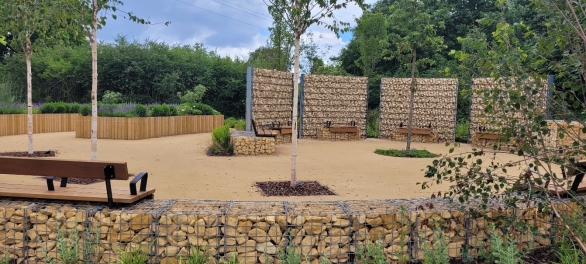
377.Publicly accessible open spaces are a key component of the Borough’s multifunctional green infrastructure network. They have many roles including providing for recreation and physical activity; encouraging social interactions; promoting physical and mental health and wellbeing and quality of life; providing facilities for a child’s development; encouraging walking and cycling; reducing flood risk; and safeguarding biodiversity. They are essential to promoting and facilitating healthy lifestyles, benefitting wellbeing and a key component of the quality and visual amenity of the local character of areas. Furthermore, open spaces, in particular natural green spaces, are a vital part of the Borough’s natural capital and key feature of the biodiversity and ecology of Solihull. Comment
378.National Planning Guidance is clear that existing open spaces, sports and recreational buildings or land should not be built on unless development proposals meet the exceptions set out in the NPPF. Comment
379.Policy SMBC/HC1: Health and Wellbeing, seeks to ensure new developments will support the provision of new open spaces or the improvement of existing provision in the area, in line with the Council’s Open Space Assessment and future revisions. Comment
380.Further detail on open space provision associated with development sites is contained within the Council’s adopted Public Open Space SPD (2026). Comment
Playing Pitches, Indoor and Outdoor Sport
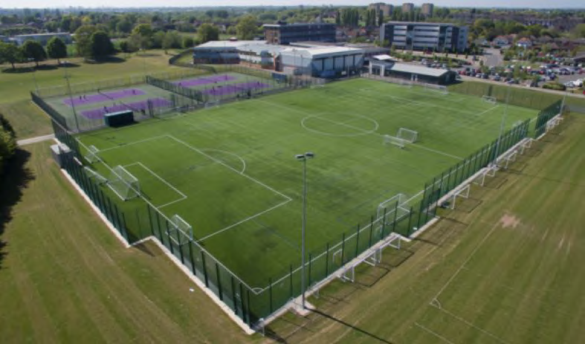
381.The latest Playing Pitch Assessment and Playing Pitch & Outdoor Sport Strategy (PPOSS) for Solihull MBC is the December 2023 refresh, prepared by Knight, Kavanagh & Page (KKP) for Solihull Metropolitan Borough Council. It was formally adopted by Cabinet on 20 June 2024. This strategy is the current Sport England-compliant evidence base that the Council should use when seeking playing pitch and outdoor sports contributions through planning obligations and when assessing the impact of Local Plan growth. Comment
382.The PPOSS is supported by an ongoing programme of annual reviews and updates, keeping the strategy robust and up to date. These annual updates ensure that supply, demand, site capacity, participation trends, facility developments and planned housing growth are regularly reviewed, maintaining the strategy as a robust and defensible evidence base for planning and investment decisions. Comment
383.The assessment concluded that, across the Borough, all sports either have existing shortfalls or are only just meeting current demand. Future housing growth is expected to: Comment
- Exacerbate existing deficiencies.
- Create additional deficiencies for some pitch and facility types.
- Increase pressure on existing sites and changing facilities.
384.The strategy therefore focuses on: Comment
- Protecting existing playing fields and outdoor sports facilities.
- Improving pitch quality to increase carrying capacity.
- Providing additional facilities where shortages exist.
- Using developer contributions and external funding to support delivery.
385.The provision of accessible sport and physical activity infrastructure also supports wider health and wellbeing outcomes, helping residents of all ages to be more active and contributing towards the prevention of ill health and health inequalities. Comment
386.Alongside the PPOSS, the Council is currently in the process of bringing forward an Indoor Sports Facilities Strategy. The strategy will assess current and future provision of indoor sports facilities across the Borough, including sports halls, swimming pools and health and fitness facilities. Comment
387.It is in this context that development proposals will be assessed against NDMPs HC3: Community facilities and public services infrastructure serving new development and HC7: Development affecting existing recreational land and facilities. Comment
388.As noted in the Delivery chapter of this plan, it has been identified that four new sports hubs should be brought forward to accommodate the additional demand for sports pitches as a result of new development. Comment