Draft Submission Plan (Regulation 19)
Conserving and Enhancing the Natural Environment Comment
Introduction
389.The Council recognises the importance of the environment, amenity and the natural capital benefits it provides. Comment
390.The Council will seek to: Comment
- Protect, enhance and restore the local landscape character and distinctiveness
- Overcome fragmentation, increase and connect the natural environment
- Secure measurable net gains in biodiversity
391.The full value and benefits of the natural environment, landscape character and local amenity, including the contribution to the green economy, the intrinsic character and beauty of the countryside, the health and wellbeing of residents, and the role of green infrastructure in reducing the impacts of climate change and improving air quality, will be taken into account in considering all development proposals. Comment
392.Joint working with neighbouring authorities and partners will be supported, recognising the need for a landscape-scale approach to the natural environment and conservation of biodiversity and geodiversity. Comment
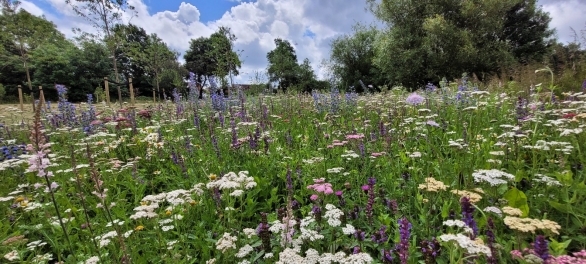
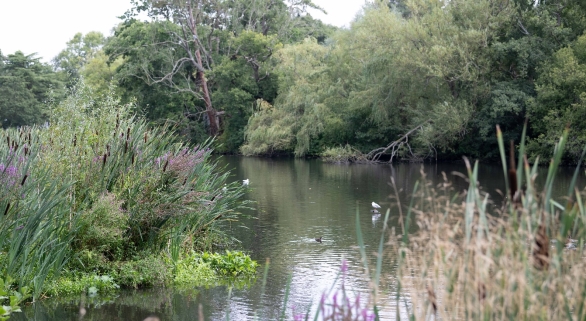
393.The Borough is home to a rich and varied natural environment and an extensive green infrastructure network both within the rural and urban landscape. These include rivers, canals, ponds, wet grasslands, species-rich wildflower meadows and pastures, acid grasslands, hedgerows, heathland, fen, woodlands including ancient woodland, veteran and ancient trees, geomorphic features, parks and green spaces, gardens and tree-lined streetscapes. Comment
394.These assets constitute the Borough’s natural capital and provide a wide range of Ecosystem Services. Comment
395.The Borough's geological and geomorphological features also form an important component of its natural environment and contribute to landscape character, biodiversity and geodiversity interests. These assets should be protected, conserved and enhanced and new sites designated where appropriate. Comment
396.Parts of the Borough’s natural environment is fragmented, degraded, at risk of pollution, poorly managed, and under pressure from visitor use. The impact of new development that changes the landscape need to be considered from the outset to minimise harm and maximise opportunities for nature recovery, including the opportunity for connecting habitats and wildlife corridors. This will improve ecological condition, restore degraded habitats, and increase resilience to future pressures. Comment
397.Strategic initiatives, including the Tame Valley Wetlands Nature Improvement Area and the emerging Meriden Gap Strategic Grassland Nature Improvement Area, demonstrate the importance of landscape-scale action to restore habitats, improve ecological connectivity and support nature recovery across the Borough. The aims and objectives of these will need to be considered to limit the potential for ecological harm and maximise opportunities. Comment
398.Approximately two thirds of Solihull Borough is countryside, and this plays an important role in shaping Solihull’s image and character. Not only does it provide an attractive setting to many of Solihull’s towns and villages, but its accessibility is important in enhancing the quality of life enjoyed by the Borough’s residents as well as its economic prosperity. Comment
399.Solihull Borough lies within the Arden Landscape Character Area, for which guidance is provided in Natural England’s National Character Area 97, the Warwickshire Landscapes Guidelines: Arden, and Solihull Borough Landscape Character Assessment 2016 and Review and Update Statement 2026. These identify the landscape types that are characteristic to the area and the need for enhancement or restoration. Comment
400.Developers will be expected to take the Landscape Character Area, Local Nature Recovery Strategy (West Midlands and adjacent LNRS where relevant), Nature Improvement Areas (or any successors into account), in locating and designing development. Comment
401.The Borough is supporting several landscape-scale nature recovery initiatives, including the Tame Valley Wetlands Nature Improvement Area and the emerging Meriden Gap Strategic Grassland Nature Improvement Area. These complement the priorities of the West Midlands Local Nature Recovery Strategy by helping to create larger, better connected and more resilient ecological networks across the Borough and wider sub-region. Comment
NPPF
402.The NPPF includes plan-making policies for climate change. In accordance with the objectives and provisions of the Climate Change Act 2008, the Council expects development to recognise the importance of existing vegetation and soils, including trees, hedgerows etc. in capturing and storing carbon and therefore retain these features. The Council will request carbon valuation evidence where tree removals are proposed and require suitable mitigation demonstrating compensation. Comment
403.The NPPF includes National Development Management Policies designed to help conserve and enhance the natural environment that are relevant to the Borough. These include: Comment
- N2: Improving the natural environment.
- N3: Trees in new development.
- N4: Protected landscapes.
- N6: Areas of particular importance for biodiversity and geodiversity.
404.NDMP N2 (1)(d). sets out that development proposals should conserve and enhance natural features and therefore the Council will require compensation for trees, hedgerows and other landscape features where they are not retained. Compensation will be informed by recognised valuation methodologies, and in accordance with Solihull’s Urban Forestry Strategy. Comment
405.NDMP N6 sets out a hierarchy approach to international, national and local importance for sites of biodiversity and geodiversity value. A separate local policy for international and national sites (such as SSSIs (for instance the River Blythe that runs through the Borough)) is not therefore considered necessary. However, it is considered necessary that a policy be included to enable Local Wildlife Sites to be designated in accordance with the NPPF. Comment
Policy SMBC/N1: Local Wildlife Sites Comment
- The boundaries of sites designated as a Local Wildlife Site (LWS) are as indicated on the policies map. Proposals that may affect LWSs will be determined in accordance with NDMP N6: Areas of particular importance for biodiversity and geodiversity.
406.NDMP N6 (1)(c) provides a DM policy to consider proposals against that relate to sites identified as a Local Wildlife Site. The glossary of the 2026 NPPF indicates that this is a term used to describe non-statutory areas identified by local authorities in the development plan for their biodiversity value. This policy therefore provides the opportunity to identify the boundary of LWSs in the Borough. Comment
407.In Solihull, Local Wildlife Sites (LWSs) are not designated by a national body such as Natural England. They are non-statutory sites identified through a local partnership process, as an independent assessment. Comment
408.New LWS are anticipated over the lifetime of this Local Plan, therefore any sites identified as pLWS are to be considered as of LWS value, unless proven otherwise. This will be expected to be evidenced in planning submissions. Comment
How the designation process works
409.The Warwickshire, Coventry and Solihull area operates a long-established Local Wildlife Sites system, as part of the former Habitat Biodiversity Audit (HBA) project, now the Natural Capital Assessment Partnership (NCAP). Habitats are surveyed across the sub-region and potential wildlife sites are assessed against agreed ecological and community criteria, supported by strong scientific evidence. Comment
410.The process broadly involves: Comment
- Identification of candidate sites through habitat surveys, species records, planning work, local knowledge and ongoing ecological monitoring.
- Assessment against LWS criteria
- Sites (new or existing pLWS) are evaluated for the presence of important habitats, species diversity, rarity, naturalness, connectivity and ecological significance.
- Selection is based on the most important, distinctive and threatened habitats and species in the local area.
- Consideration by an expert panel - in Warwickshire, Coventry and Solihull, designation is considered by a panel including representatives from Warwickshire Wildlife Trust, Natural England, Solihull Metropolitan Borough Council, Warwickshire Ecological Services and occasional input from independent ecological experts.
- Designation and inclusion in the LWS register - once approved, the site is recorded as a Local Wildlife Site and used in planning and conservation decision-making.
411.The review of ecological data for new development sites against the LWS criteria is especially important for identifying areas that are of high local, regional or national value that are worth of retention, or enhancement. This should consider the ecological potential or restoration potential of such habitats too. Comment
412.In general, developments and projects should seek to avoid impacts upon designated sites and should include mechanisms and design refinements to buffer and protect such designated sites from negative impacts and seek to restore prior condition, where this is favourable. Comment
Protected and Priority Species and Habitats
413.The Borough supports a range of irreplaceable, Habitats of Principal Importance (Priority Habitats) and otherwise notable habitats. For species the Borough supports many protected species, Species of Principal Importance (Priority Species) and otherwise notable species. Some of these are threatened at National, to Regional to local levels, with many of Material Planning consideration. These are reliant on the local landscape, habitats within and the ecotones (interface) between these habitats. Continued support for the habitats present in the local landscape is necessary to continue to support these species. With development comes change and species shifts, this Local Plan identifies the need for appropriately informed ecological assessment to understand the context take account of the impacts of any new developments and projects and the positive or negative changes anticipated upon the Borough’s habitats and species and their extent and/or use of the local landscape. Comment
414.Applicants are encouraged to make use of strategic approaches to species conservation where available, which when applied correctly, can help secure positive outcomes for nature recovery whilst facilitating sustainable development. Comment
415.Specific habitat considerations are expected to also include review of hydrological connections outside of a development or project’s site boundary, where development within the site boundary has the potential to impact either negatively or positively on habitats, sites or features that are hydrologically connected. Comment
416.Development proposals should avoid adverse impacts on protected and priority habitats and species and will be expected to demonstrate how the mitigation hierarchy has been followed. Comment
417.If, having followed the mitigation hierarchy, there is a requirement for additional off-site biodiversity compensation to fully address impacts on species and habitats, development will only be supported where it can be demonstrated that viable off-site habitat proportionate to the impact can be provided; details of which should be submitted to and approved by the Council prior to a planning decision. Any required mitigation or compensation should be provided locally in the first instance, then within the National Character Area or Local Nature Recovery Strategy Area, then elsewhere in adjoining LA areas and then beyond. This may be for example by joining an approved off-site biodiversity compensation scheme where there is an operational scheme covering the local area, such as through Biodiversity Net Gain processes or the District Licensing Scheme for great crested newts or further future government endorsed schemes. Comment
418.For protected great crested newts, the Council holds an Organisational (or ‘District’) Licence, granted by Natural England (NE), this provides an alternative licensing option for developers to address impacts and provide compensation locally. Whilst this method exists, due care will also expect to be taken regarding other species using such habitats and these will require appropriate design measures and consideration following the mitigation hierarchy and be fully mitigated or compensated for where impacts are identified. Comment
419.Any off-site habitat compensation must be capable of being managed, maintained and monitored for at least 25 years and secured through planning conditions, legal agreements, or conservation covenants, to be agreed on a case-by-case basis. Transparent and regular reporting will also be required, where specified in planning responses. Comment
420.Plans and projects will be expected to contribute to improvements in the abundance, diversity and long-term resilience of protected, threatened or otherwise notable species. Especially where this aligns with LNRS objectives or other specific local objectives that require targeted action but at a smaller scale. Comment
Biodiversity Net Gain
421.Chapter 19 of the 2026 NPPF (including policies N1 and N2) make specific reference to the delivery of mandatory Biodiversity Net Gain (BNG). This was introduced through the Environment Act 2021, with a phased role out beginning in February 2024. Whilst it has since been subject to adjustment it relates to a range of development types and requires a mandatory 10% net gain in BNG. Where there is evidence that the habitat has been deliberately degraded or cleared in order to reduce the site's biodiversity baseline, the local planning authority will, in accordance with national guidance, assess the habitat based on its earlier condition rather than its degraded state. As a backstop this will be assessed as of 30th January 2020. Comment
422.In accordance with National Guidance, BNG should be delivered on site wherever possible to align with other local strategies, such as the West Midlands LNRS and adjoining LNRS. The Council consider on site delivery as the best way of maximising environmental benefits for the Borough and will work with applicants to achieve this wherever physically possible and viable to do so. When designing schemes from the outset applicants are strongly encouraged to consider the priorities identified within the West Midlands Local Nature Recovery Strategy and the Council’s Natural Capital Investment Strategy to maximise opportunities for delivering biodiversity net gain in locations that support wider nature recovery objectives. Comment
423.BNG proposals either on-or off site will be expected to demonstrate cohesiveness and validity of design, that is sensitive and supportive of the objectives of the NPPF and commensurate with the policy here and elsewhere in this Local Plan. These should maintain habitats identified as stepping stones, increase ecological network functionality, and improve climate and ecosystem resilience. BNG proposals also must not conflict with species objectives where there may be conflicts, such as ground based organisms or species with low dispersal mechanisms / small home ranges. The Council will continue to support monitoring of BNG provisions and will secure specific monitoring fees in accordance with policy SMBC/D2 to help ensure their appropriate delivery, maintenance and management. Comment
Environment Banks
424.The Council will continue to work with colleagues across the WMCA and Warwickshire to help maximise opportunities for environmental enhancement. Where appropriate this can include environment banks to help deliver biodiversity net gain at a larger, Borough wide scale. Comment
Nature-based Solutions (NbS)
425.In line with National Policy due consideration of the study, retention, enhancement and creation of Nature-based Solutions are sought. Existing Nature-based Solutions provide buffering for our inhabitants (both wildlife and people) from the effects of climate change and often form complex habitats that support a diversity of flora and fauna. Justification will be required to be demonstrated for any negative impacts or losses to these habitats and appropriate mitigation or compensation sought. Developers and through projects and plans designers and consultants will be expected to integrate nature-based solutions that provide both water quality and true biodiversity benefits. Comment
Soilscapes
426.Developments and projects should also seek to maintain local topography to support our landscape character and soil diversity and quality, with appropriate soil considerations from design through to the delivery of such schemes. Due consideration of expected of current and future soil types, soil health, soils biodiversity, soil function, protection and reuse of topsoils (with associated seed bank) and sub-soils (to provide substrate of lower nutrient status), and protection of areas of peat where evident, noting these may be small and not yet mapped or found at considerable depth. Comment
Water Quality
427.Our Borough’s natural environment is largely supported by the river systems present and the health of these affects wider ecosystem health both within the Borough and wider catchment. Development will be expected to support and enhance the health, function (geomorphology and connectivity) and biodiversity value of our local river systems, many listed as designated sites. Provision of engineered solutions are not expected to affect the existing value of NbS and are expected to support local biodiversity (SuDS and rainwater harvesting, green and blue roofs, water treatment and attenuation). Comment
428.We will expect developers and in council actions through our plans and projects to: Comment
- Protect aquatic, riparian and wetland habitats from degradation, fragmentation and pollution. Promote the conservation of protected, priority and locally important species associated with freshwater and wetland environments. Seek opportunities to restore natural hydrological processes and improve habitat connectivity between waterbodies. Support the creation, enhancement and long-term management of ponds, wetlands, reedbeds, floodplain habitats and riparian corridors, where appropriate.
- Identify and manage risks from sediment, nutrients, chemicals, fuels, waste materials and invasive non-native species. Implement pollution prevention measures during construction, maintenance and operational activities. Provide sustainable water design that supports both terrestrial and aquatic biodiversity. Ensure incident response procedures are in place to minimise environmental harm from accidental pollution events. Encourage responsible and sensitive use of pesticides, herbicides and fertilisers, where necessary. Recognise the importance of all watercourse and waterbodies for regulation of local climate. Promote habitat diversity and ecological functioning to improve resilience to drought, flooding and climate change for our people and wildlife.
Light pollution
429.Development across the Borough has the potential to change the nightscape permanently. Specific species and habitats are particularly sensitive to light pollution or are intolerant so development will need to consider the changes in this and the impacts this has on wildlife and the natural environment. Comment
Air Quality
430.Air quality in general is good and is improving across the Borough, but that is not withstanding the threats to the natural environment. The Council will seek additional measures beyond those for human health that have the potential to affect our biodiversity. Comment
Generic disturbance and cumulative impacts
431.Developments and projects will be expected to consider the cumulative impacts of development across the Borough, where this results in significant impacts either positive or negative. Each development is considered on its own merits, but the recognition of the cumulative impacts will be expected to be considered at a level relevant to the assessment type. Comment
Biodiversity Duty
432.The Council will discharge its biodiversity duty through the implementation of actions and objectives within The Natural Capital Investment Strategy and this Local Plan (and supporting neighbourhood plans) and expects development proposals to demonstrate how they contribute to the conservation and enhancement of biodiversity and the delivery of nature recovery objectives. Comment
