Draft Submission Plan (Regulation 19)
Delivering a Sufficient Supply of Homes Comment
Policy SMBC/HO1: Provision of Land for Housing Comment
- The Council will identify sufficient land for at least 13,096 net additional homes, to ensure sufficient housing land supply to deliver 21,913 additional homes in the period 2026-2043.
- The sites to be identified will include the following:
- .8,219 dwellings to be accommodated in the broad locations identified in the table below.
- .4,877 dwellings to be accommodated on the sites allocated for development in the table below.
- The average annual housing land provision target is 1,289 net additional homes per year (2026-2043). This will be provided via a stepped trajectory as follows:
- .2026-28: 400 dwellings per annum.
- .2028-33: 967 dwellings per annum
- .2033-43: 1,628 dwellings per annum
Policy SMBC/HO2: Broad Locations Comment
- The areas identified on the Policies Map as a Broad Location for Development are expected to contribute towards meeting the Borough's development needs during the plan period.
- Development proposals within the broad location will be supported in principle where they:
- Are consistent with the spatial strategy of the Plan;
- Demonstrate a comprehensive and coordinated approach to development;
- Provide or contribute towards necessary infrastructure; and
- Avoid, mitigate or compensate for adverse environmental impacts.
- The broad locations do not constitute site allocations, and the precise scale, form and disposition of development will be determined through either (i) subsequent planning applications having regard to all NDMPs and relevant development plan policies or (b) through further work in accordance with part 4 of this policy.
- The future amendment of Green Belt boundaries in these locations will be confirmed through one of the following 3 mechanisms:
- The next review/update of the Councils local plan;
- A new or an update to the respective Neighbourhood Plan; or
- A new Supplementary Plan brought forward under the new planning system.
101.It is recognised that delivery of this policy will be through a mix of (a) reacting to planning applications and (b) being more proactive with bringing forward a plan of a type included in part 4 of the above policy. This is partly a reflection of the likelihood for planning applications to be submitted in for developments that may be consistent with NDMPs S5 (1)(h) and GB7 (1)(h). Comment
102.The Council’s preference is for joint working with promotors, developers and other stakeholders (including parish councils and neighbourhood forum(s) to achieve a comprehensive development that addresses infrastructure needs in a coordinated manner. Comment
103.The adoption of this plan does not automatically remove Green Belt status from land within the broad locations included in the plan[19]. As noted in the above policy, amendments to the boundaries of the Green Belt will only occur through a further local plan, a Neighbourhood plan or a Supplementary Plan. Comment
Housing Requirement
Local Housing Need (LHN)
104.Paragraph 62 of the NPPF sets out that to determine the minimum number of homes needed, strategic policies of the plan should be informed by a Local Housing Need assessment, conducted using the standard method in the national Planning Practice Guidance. The standard method uses a formula that incorporates a baseline of local housing stock which is then adjusted upwards to reflect local affordability pressures to identify the minimum number of homes expected to be planned for. Comment
105.The table below sets out the key data inputs used and the resultant calculation of the LHN for the plan period. Comment
|
Data Description |
Value |
|
Total dwelling stock (no. of existing dwellings) |
96,333 |
|
0.8% annual increase in housing stock |
771 |
|
Current median house price[20] |
£330,000 |
|
Current median workplace earnings[21] |
£42,587 |
|
Average affordability ratio (2022-26)[22] |
8.54 |
|
Percentage increase[23] |
67.2% |
|
LHN (dwellings per annum) |
1,289 |
|
Number of years in the plan period (2026-2043) |
17 |
|
Total LHN for plan period |
21,913 |
106.In the 2020 plan the local housing requirement was established at 816 dwellings per annum (dpa). The new standard methodology for calculating Local Housing Need was subsequently introduced in December 2024 and had a significant impact on the level of housing required across the Borough. Under the new standard method the LHN for the Borough has now increased to 1,289 dpa. This represents an increase of 473 dpa or 58%. Over the course of the plan period (17 years) this would increase the number of dwellings to be accommodated by around 8,000 dwellings. Comment
Housing Completions 2015-25
107.It is useful to provide context to the LHN by drawing a comparison to completions that have taken place in the Borough over the last ten years[24]. Although annual numbers have fluctuated between 287 and 828 dwellings per annum, the ten-year average has been 647 dpa. From this it can be seen that the LHN for the Borough is double the number of completions that has taken place in recent years. Comment
Stepped Trajectory
108.In the Housing Supply and Delivery chapter of the PPG, it states[25] that: Comment
"A stepped housing requirement may be appropriate where there is to be a significant change in the level of housing requirement between emerging and previous policies and/or where strategic sites will have a phased delivery or are likely to be delivered later in the plan period."
109.It goes on to say that strategic policy makers must identify the stepped requirement in strategic housing policy, support it with evidence, and must not unnecessarily delay meeting development needs. Comment
110.The housing requirement in this plan is significantly higher than (a) was to have been included in the 2020 plan, and (b) previous delivery. Furthermore, a significant proportion of the land supply is expected to come forward on strategic sites and/or from broad locations, the majority of which are situated within the Green Belt. In these circumstances it is considered a stepped trajectory is justified as indicated in Policy SMBC/HO1. This will be provided over three time periods. This reflects the small number of completions expected in the two-year period before the plan is adopted. The second period then seeks to provide 75% of LHN over the first five-year period post adoption of the plan. The shortfall would then be made up over the remaining 10 years of the plan. Housing Supply Comment
111.The table below sets out the land supply 2026-43 (as of 31st March 2026). Comment
|
Source |
Capacity |
|
1 – Site with planning permission (started) |
493 |
|
2 – Sites with planning permission (not started) |
2,249 |
|
3 – Sites identified in land availability assessments |
665 |
|
4 – Sites identified in the brownfield land register |
21 |
|
5 – Town centre sites |
2,169 |
|
6 – SLP 2013 allocations without planning permission |
65 |
|
7 – Less a 10% discount to rows 2, 3, 4, 5 & 6 |
-517 |
|
8 – Broad locations (inc. development around railway stations |
8,219 |
|
9 – UK Central Hub Area (to 2043) |
1,600 |
|
10 – Short-term Grey Belt windfalls |
1,000 |
|
11 – Other windfall supply (2028-43) |
2,250 |
|
12 – Allocated Sites |
4,877 |
|
Total Capacity |
23,091 |
112.Commentary on these land supply components is as follows. Comment
Row 1: Site with planning permission (started)
113.This includes all planning permissions where development has commenced on site, but the development has not been completed. This excludes dwellings on sites under construction which were completed before 1st April 2026, but will include the dwellings on such sites that have been/will be completed after this date. Comment
Row 2: Sites with planning permission (not started)
114.This relates to planning permissions (including outline, full and/or reserved matters approvals) where permission has been granted, but the development has not commenced on site. Comment
115.Following the work undertaken on the 2020 plan, which included allocating sites in the Green Belt, a number of planning applications for these developments have now been submitted, and some have now got planning permission. These are included in this part of the land supply. Comment
Row 3: Sites identified in land availability assessments
116.This includes sites identified in land availability assessments that are expected to come forward in the plan period. These are on sites that are not dependent on a change in planning policy (e.g. to take a site out of the Green Belt). Comment
Row 4: Sites identified in the brownfield land register (BLR)
117.Where not included in other parts of the land supply, this component includes the remaining sites identified in the BLR. Comment
Row 5: Town centre sites
118.This component includes developments expected to come forward in Solihull and Chelmsley Wood town centres as follows: Comment
- Chelmsley Wood – 100
- Solihull – 2,069[26]
119.A major development at Mell Square (which is to be known as Holbeche Place), which includes provision for up to 1,600 residential units[27], was granted planning permission on 1st April 2026. The contribution to land supply from this development is therefore not yet included in row 2 of the above table (planning permissions (not started)) but has been included in this component. Comment
120.Other potential developments in the town centre that were envisaged by the Solihull Town Centre Masterplan (2020) includes 469 dwellings in the Heart of Solihull quarter (Eastgate). Comment
121.Following masterplanning work at Chelmsley Wood town centre, the centre is considered capable of accommodation c100 dwellings. Comment
Row 6: SLP 2013 allocations without planning permission
122.The only remaining site to come forward from this plan is that relating to development at Riddings Hill in Balsall Common (now referenced as site allocations BC7 in the Balsall Common chapter). Comment
Row 7: Less a 10% discount to rows 2, 3, 4, 5 & 6
123.To reflect potential non-implementation a 10% discount has been applied to these sources of land supply. Comment
Row 8: Broad locations (inc. development around railway stations)
124.The 2026 NPPF promotes development around well-connected railway stations through Policy S5 (1)(h) and policy GB7 (1)(h). These policies specifically indicate development proposals (within reasonable walking distances) can be considered as not inappropriate development in the Green Belt. Effectively this would create another form of windfall supply that could be expected to come forward in the plan-period without needing any further policy changes in a development plan. Comment
125.The 2026 NPPF defines a reasonable walking distance as 800m, and only those parts of a site that fall within this distance should be considered as appropriate development under the relevant NDMPs. However, in the context of the land identified within Solihull, this could (a) create illogical or arbitrary site boundaries and/or (b) fail to maximise the benefit of locating development in the vicinity of railway stations, which are likely to be the more sustainable locations in the Borough. Comment
126.Therefore, an assessment on a station-by-station basis has been undertaken to identify the likely capacity that could come forward from sites within 1,000m of railway stations and this has been included in the above table. This exercise has considered the potential capacity around relevant stations by excluding (a) land that is already built up and (b) other land that is unlikely to be suitable for development as it would be contrary to a NDMP (such as parks, ancient woodland or flood zones). Comment
127.This approach, which is based on the new national policy position will help deliver an enhanced supply that can be provided in a more comprehensive manner. The Council will work with landowners, site promotors and local communities (including the relevant Parish Council and/or Neighbourhood Forum) to help steer delivery of development in these broad locations. This could be pursued through bringing forward supplementary plans (in accordance with NDMP PM4 and/or neighbourhood plans (in accordance with NDMP PM5 which will identify detailed sites and strategic infrastructure. This approach will also help make provision for treatment of development in a comprehensive manner. Comment
128.Whilst development of land within 800m walking distance of a railway station may be considered as appropriate development, development of land between 800m and 1,000m (or even beyond) would need to be based on very special circumstances, having regard to relevant site circumstances, infrastructure delivery and the context of this plan (and its spatial strategy). As such, sites that fall within the 800m -1,000m buffer zone are unlikely to be isolated sites but instead more comprehensive sites that maintain connections and accessibility to land within the 800m buffer area. Comment
129.Other broad locations are as set out in the settlement chapters. Comment
130.Summary table of broad locations to which Policy SMBC/HO2 applies is as follows: Comment
|
Broad Location |
Capacity |
|
BC9 – Land at Phase 3 of the Balsall Common Relief Road |
1,100 |
|
BC10 - Berkswell |
1,350 |
|
BC11 - Tile Hill |
1,190 |
|
BL4 - Shirley, Whitlocks End, Wythall and Earlswood Stations |
1,577 |
|
HA3 - Hampton in Arden |
1,350 |
|
KN3 - Dorridge |
814 |
|
NS2 - Marston Green |
36 |
|
SO3 - Widney Manor |
802 |
|
Total |
8,219 |
Row 9: UK Central Hub Area (to 2043)
131.Development at Arden Cross and around the HS2 Interchange is expected to take place over an extended period, which is partly in response to the timings for the return of the non-operational elements of the HS2 land to landowners. The 2021 masterplan for the site indicated the creation of a new residential community delivering up to 3,000 new homes incorporating a mix of tenure, type and density. Comment
132.Whilst the delivery of homes at Arden Cross is not dependent on the delivery of HS2 (which has recently undergone a ‘reset’ and programme review) the revised programme for HS2 is likely to have implications on the timescales for land becoming available for development at Arden Cross, albeit the first land returns are expected by 2030. Therefore, at this stage it is considered prudent to continue to acknowledge that the residential component of the development will not be completed within the plan period, and for land supply purposes a total of 1,600 is considered a reasonable expectation within the plan period, and this would be in the later years. Comment
133.As noted elsewhere in this plan, development at the NEC is expected to shift the focus from residential development to employment and leisure uses in the more underutilised northern car parks. Whilst later phases of a refreshed masterplan may make provision for some residential development, this is likely to be in the long-term and probably beyond this plan period. Therefore, this component of the land supply does not include any residential capacity at the NEC. Comment
Windfall Developments
134.Given the changes to the NPPF in 2024 which introduced the concept of Grey Belt, it is considered appropriate to look at the windfall supply in two parts: Comment
- Row 10: A short-term contribution to windfall supply from Grey Belt developments, and
- Row 11: A supply throughout the plan period from typical/traditional windfall developments.
Row 10: Grey Belt Windfalls
135.This will effectively be a short-term interim windfall supply likely to come forward in the period until the plan is adopted. Comment
136.The 2024 NPPF introduced the concept of Grey Belt and under paragraph 155 some developments under this paragraph should not be regarded as inappropriate development in the Green Belt (if there evidenced unmet need for a development). This prompted a number of planning applications to be submitted, and more may follow. One of the conditions to be met is that there must be a demonstrable unmet need for the development, and this can be established through the lack of a 5-year land supply or where the Housing Delivery Test falls below 75%. These tests are likely to be met until (at least) when this plan is adopted around the end of 2027/beginning of 2028. Comment
137.The practical consequence of this is that there will be a land supply from this source for around two years. Indeed, there is evidence (through planning applications being granted either by the Council or via the appeal route[28]) that this source is already yielding a land supply. At the time this plan was published, around 20 planning applications for major residential development were awaiting determination[29]. In total, these applications contained proposals for over 4,000 dwellings. These applications are likely to be determined before the plan is adopted and, for those that are approved, will contribute to the land supply for the plan period. This land supply would not otherwise be captured. Using a cautious approach, it has been assumed 1,000 dwellings may reasonably be expected to come forward as part of the land supply under this category, thus they have been included in the above table. This will be a ‘one off’ contribution to the land supply, rather than an annual rate over the plan period Comment
138.Where such sites also sit within reasonable distance of a railway station care has been taken to avoid double counting within the respective supply components, as such sites would be included in the railway stations windfall. Comment
Row 11: Other windfall supply
139.Other windfall housing sites are sites that will become available for residential development during the Plan period that cannot be identified now, even as either broad locations or types of development as described above. Typically, these will be smaller sites than the other windfalls noted above and are likely to come forward on an annual basis. Comment
140.There is compelling evidence that such windfall sites consistently become available in Solihull. The windfall assumption in the adopted Solihull Local Plan was 150 dpa. The average windfall supply since 1992 increased up to 231 dpa (measured over a 10-year period). The 2020 plan included a windfall rate of 200 dpa which the Inspectors did not indicate would need to be amended. Comment
141.However, given the additional windfall categories noted above, it has been considered prudent to reduce this ‘other windfall’ from 200 dpa to 150 dpa. Comment
142.To prevent double counting with existing permissions, the windfall completions are counted from the third year of supply, therefore from 2028 onwards. This will result in this category of windfall development yielding supply over a 15-year period[30] at 150 dpa, i.e. 2,250 dwellings in the plan period. Comment
Row 12: Allocated Sites
143.This relates to allocations proposed in this plan and includes those carried forward from the 2020 plan that (a) remain as appropriate allocations and (b) have not already received the benefit of a planning permission (as at 31st March 2026). Comment
144.Summary table of residential allocations[31]. Comment
|
Site |
Capacity |
|
BC1 – Barratt’s Farm, Balsall Common |
1,160* |
|
BC3 – Windmill Lane/Kenilworth Road, Balsall Common |
132 |
|
BC5 – Trevallion Stud, Balsall Common |
310 |
|
BC6 – Lavender Hall Farm, Balsall Common |
92 |
|
BL1- West of Dickens Heath |
536* |
|
BL2 – South of Dog Kennel Lane (west), Blythe |
700* |
|
BL3 – Whitlock’s End Farm, Blythe |
450 |
|
HA1 – Meriden Road, Hampton in Arden |
100 |
|
HH1 – School Road, Hockley Heath |
100* |
|
KN1(A&B) – Hampton Road, Knowle |
193 |
|
KN2 – South of Knowle |
225* |
|
ME1 – West of Meriden |
10 |
|
SO1 – East of Solihull |
770* |
|
SO2 – Moat Lane Depot, Solihull |
99 |
|
Total |
4,877 |
145.Within the above table, those sites that have either received planning permission or have been the subject of a resolution to grant planning permission (at least in part), since 1st April 2026 are marked with an *. Comment
146.To avoid confusion, the site references used in the 2020 plan have been carried forward (rather than renumbering sites) and so it may appear that the above table is incomplete. For instance, the entries jump from BC1 to BC3. For completeness the list below fills the gaps and notes why they are not now included: Comment
- BC2 – Frog Lane, Balsall Common: site now has planning permission.
- BC4 – Pheasant Oak Farm, Balsall Common: site now has planning permission.
- HA2 – Oak Farm, Catherine-de-Barnes: site now has planning permission.
- NS1 – Kingshurst Village Centre: site now has planning permission and is under construction (some residential completions have now take place).
Balance of Housing Need to Housing Supply
147.Measured against a need of 21,913 dwellings over the plan period, there is a supply of 23,091 dwellings, a surplus of 1,178 dwellings (or 5.4 % when measured against the need)[32]. Comment
Affordable Housing Policy
Policy SMBC/HO3: Affordable Housing Comment
- The Council will require developers of allocated and windfall sites to contribute to affordable housing on residential sites of major development, where 10 or more homes will be provided, or the site has an area of 0.5 hectares or more to meet the housing needs of the Borough. Affordable housing includes social rented, affordable rented, intermediate tenure and Starter Homes, which is available at below market price or rent, and which is affordable to households whose needs are not met by the market as defined by Annex 2 of NPPF.
- In accordance with NPPF, the affordable tenures need in Solihull have been informed by a housing needs assessment. The Borough definition of ‘affordable’ will be informed by work with the WMCA and build upon the definitions in national guidance.
- Contributions will be expected to be made in the form of:
- 50% affordable housing on sites that are located in the Green Belt or released from the Green Belt; or
- 40% affordable dwelling units on all other development sites that meet the threshold.
- In applying these standards the Council may take into account the following factors:
- Site size;
- Accessibility to local services and facilities and access to public transport;
- The economics of provision, including particular costs that may threaten the viability of the site;
- Whether the provision of affordable housing would prejudice the realisation of other planning objectives that need to be given priority in the development of the site;
- The need to secure a range of house types and sizes in the locality in helping to achieve socially balanced and mixed communities; and
- Vacant Building Credit.
- Where on-site provision is not feasible or viable there will be a financial contribution towards the provision of affordable housing that would not otherwise be provided, elsewhere within the Borough. The Council will instruct a qualified valuer to examine the off-site affordable housing financial contribution. The cost of the Council’s qualified valuer will be met by the applicant.
- The extent of affordable housing that should be provided in relation to developments that either re-use existing buildings or include the demolition of existing buildings will be assessed according to the 'vacant building credit'. The approach to calculating the vacant building credit is set out in the ‘Meeting Housing Needs’ Supplementary Planning Document.
- On-site provision and off- site contributions should be calculated based on a tenure split of 65% social rent, with 35% provided as shared ownership.
- The Council acknowledges that the delivery of affordable homes in accordance with this policy requires a registered provider. In the absence of a registered provider, the Council will work with the developer to explore variations in affordable tenure and/or payment of a commuted sum in lieu of on-site provision. Such options may include the delivery of low-cost homes for sale (as defined in the NPPF) (e.g. starter homes) or the gifting of a reduced number of affordable dwellings to the Council or a registered affordable housing provider approved by the Council; or payment of the Affordable Housing Contribution by the Owner in lieu of providing the Affordable Housing Units.
- Where a Neighbourhood Plan has been adopted and a relevant policy included, the revised mix of affordable housing (including type, mix and/or tenure) will take precedent over the relevant details set out in this policy. This will be influenced by an up-to-date housing needs assessment that has been conducted in accordance with National Planning Policy and tested through examination of the Neighbourhood Plan.
- The social rented should be provided as follows, but will take into account site circumstances:
- 27.5% one bedroom maisonettes/apartments (2 person home)
- 32.5% two bedroom houses (4 person home)
- 27.5% three bedroom houses (5 person home)
- 12.5% four bedroom houses (6 person home)
- The shared ownership should be provided as follows, but will take into account site circumstances:
- 12.5% one bedroom maisonettes/apartments
- 47.5% two bedroom houses/apartments
- 32.5% three bedroom houses
- 7.5% four bedroom houses
- Specific sites circumstances are defined as town centre development, which may result in a different mix of type and size being delivered.
- The availability of a rented home at time of need and that meets a household’s size mean that social rent is most needed to meet homeless and housing needs in a timely way. Affordable rent will only be supported if the rent is provided at target rent.
- Where the economics of provision of affordable housing, including particular costs that may threaten the viability of the site, the applicant is required to submit a viability assessment at the time of planning application submission. The Council will instruct a qualified valuer to examine the submitted viability assessment. The cost of the Council’s qualified valuer will be met by the applicant.
- Further detail and guidance to support the delivery of Policy SMBC/HO3 will be set out in the Meeting Housing Needs Supplementary Planning Document
Justification
148.This policy is consistent with the Government’s policy that where local authorities have identified that affordable housing is required they should set policies for meeting this need on site, unless off-site provision or a financial contribution of broadly equivalent value can be robustly justified and the agreed approach contributes to the objective of creating mixed and balanced communities. Comment
149.The Council is justified in requiring the on-site provision of affordable housing wherever feasible in order to maximise the provision of affordable homes on sites of all values. It is recognised that the provision of affordable housing in some parts of the Borough can present challenges to developers because of existing use values. These are often in parts of the Borough where affordable homes are in particularly short supply so insistence on on-site provision is justified to ensure that homes are provided in these locations. Comment
150.The requirement for the provision of affordable housing is justified on the basis that Solihull has a high level of unmet housing need, as evidenced in the Housing and Economic Development Needs Assessment (HEDNA). This is supported by official data produced by MHCLG and local Borough wide data on housing need. Comment
151.The HEDNA identified a need for 714 affordable homes per annum. The scale of need means that the Council is justified in seeking to secure as much affordable housing as viability allows. Comment
152.The consequences of unmet housing need are significant. These can include homelessness, households in temporary or unsuitable accommodation for longer periods of time and overcrowding. Insufficient affordable housing will also act as an impediment to economic growth where companies experience problems in workforce recruitment and retention. Comment
153.The level of need for affordable housing is therefore high in relation to the level of new provision. Provision of affordable homes is however limited by the proportion of development that takes place, and will continue to take place, on sites below the national affordable housing threshold. The threshold is set in line with NPPF. Setting the threshold of major development, where 10 or more homes will be provided and is justified on the basis that housing developments at and above this level should contribute to meeting the need for affordable housing. Comment
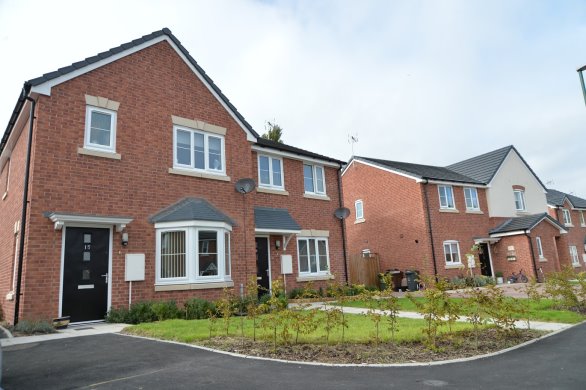
154.Since the adoption of a 40% affordable housing target (Policy H4 in the Solihull UDP, February 2006 and Policy P4 in the Solihull Local Plan, December 2013), a wide range of privately led residential developments have made provision at this level. The implementation of the policy has had due regard to the suitability of each site and its capacity to provide affordable homes. The Authority Monitoring Report highlights the delivery and contribution this policy makes towards meeting the Borough’s affordable housing need. It is therefore considered appropriate to the Borough’s local circumstances. Comment
155.Policy SMBC/HO3 is set on a Borough wide basis. This reflects the fact that needs cannot always be met where they arise, so use has to be made of the development opportunities that become available. Therefore, any development may need to provide for needs arising in another part of the Borough. The only exception to this may be on rural ‘exceptions’ sites where housing may be reserved for those with a local connection. Comment
156.The policy applies to all development in the ‘C3’ use class. The policy will also apply to ‘C2’ development that provides individual self-contained units that can be counted as part of the Borough’s overall housing supply. Comment
157.The Council recognises that provision of affordable housing will result in a cost to developers and so the implementation of this policy requires a reasonable and flexible approach, reflecting individual site characteristics. Where there are factors that could threaten the viability of developments as a result of site-specific constraints or circumstances these will be considered in negotiations. However, the overall target is that 50%/40% of all new housing built in the Borough will be affordable housing. Comment
158.The Council is justified in adopting its definition of affordability because it provides clear guidance to developers on what is required. The definition will be based on a housing needs survey based on Borough data on incomes and house prices (Solihull Housing Economic Development Needs Assessment 2026), however it is subject to monitoring and review. The Council is justified in defining the tenure of ‘affordable’ homes on the basis that a spread of tenure options is required to satisfy needs and aspirations of households. Comment
159.Most households in housing need are only able to afford to rent below market level, so the provision of homes at social rent is the most important aspect of affordable housing provision. In view of the greater cost to land value of rented provision, the ability to require a proportion of any affordable provision to be for rent is essential. The objective will be to maximise housing provision for those in most need whilst producing balanced communities and to secure a level and mix of provision which is viable and practicable to the developer. Comment
160.The Council also wishes to promote affordable routes to home ownership. This will mainly be for shared ownership but will include discounted market products as may be required by legislation and planning guidance at the time of determination. The policy therefore provides a range of affordable housing provision. Comment
161.National Planning Policy Framework defines Entry Level Exception sites as sites that are suitable for first time buyers (or those looking to rent their first home). The Council will support these in accordance with the latest National Planning Policy Framework and Planning Policy Guidance at the time of decision making. Comment
162.National Planning Policy Framework defines Build to Rent as purpose-built housing that is typically 100% rented out. Schemes typically offer longer tenancy agreements of three years or more and will typically be professionally managed stock in single ownership and management control. The Council will support these in accordance with the latest National Planning Policy Framework and Planning Policy Guidance at the time of decision making. Comment
163.The policy in this plan does not cover matters relating to how affordable dwellings will be allocated for occupation. Eligibility and priority is governed by the Councils Housing Allocation Scheme. This is a statutory policy required under the Housing Act 1996. However, where Neighbourhood Plans include a policy relating to the occupation of affordable housing (through for instance a priority being given to those with a strong local connection), then due consideration should be given to the neighbourhood plan. Comment
164.The Council will seek to ensure that proposals are not artificially structured to avoid a threshold that would trigger the need for affordable housing to be provided. Comment
Self and custom housebuilding Policy
Policy SMBC/HO4: Self and Custom House Building Comment
- The Council will encourage developers to make a contribution to Self and Custom Build Housing on residential sites of 300 units or more.
- The Council expects these plots to be offered for sale with outline planning permission, fully serviced to the boundary, and unconstrained access to the highway for a period of 12 months to those Registered on Solihull’s Self and Custom Build Housing Register. The value of the plots will be subject to an independent valuation by a Registered Surveyor. After 12 months the plot will revert to the developer and will be built out for market housing
165.The Council is justified in encouraging provision for self and custom build housing in order to comply with the Self and Custom Housebuilding Act, the Housing and Planning Act, National Planning Policy Guidance and the needs on the self-build register. Comment
166.The Housing and Planning Act 2016 took forward the requirements of the Self-build and Custom Housebuilding Act 2015 further by introducing a ‘Right to Build’. This requires local planning authorities to support custom and self-builders registered in their area in identifying enough suitable plots of land to build or commission their own home to meet local demand through their Local Plan. Comment
167.In accordance with the Self-Build and Custom Housebuilding Act 2015 and the Housing and Planning Act 2016 the Government released Ministerial Regulations on 31 October 2016. These Regulations enable the Council to split the Register into two parts. Part 1 of the Register is for those who potentially meet Local Connection Criteria and Assessment of Financial Resource. Applicants who meet these qualifying criteria will have the ‘Right to Build’ and Policy SMBC/HO4 will create suitable plots of land to build or commission their own home. Part 2 of the Register is for all other applicants. The Council does not have a legal obligation to identify enough suitable plots of land for those on this part 2 of the Register, however it does illustrate a level of demand, which has been considered through the development self-build and custom housebuilding policy. Comment
168.The Council has approved Local Connection Criteria and Assessment of Financial Resources and fees for the Solihull Self-Build and Custom Housebuilding Register. Comment
Meeting the housing needs of older and disabled persons Policy
Policy SMBC/HO5: Housing for Older and Disabled People Comment
- New housing developments will be expected to provide a mix of dwelling size and type to meet the identified needs of older people and those with disabilities and special needs, in accordance with current assessments of housing need (HEDNA) and in accordance with the Council’s most up-to-date statement of need on older person’s accommodation the Council Market Position Statement.
- All new build housing on major development sites must be built to Category M4(2) (Accessible and Adaptable dwellings) of approved Building Regulations Document M; Volume 1, unless it is built into M4(3) for both market and affordable;
- At least 5% of housing on major developments must be wheelchair user dwellings to M4(3) of the Building Regulations, for both market and affordable.
- All developments of 300 dwellings or more must provide specialist housing or care bedspaces in accordance with the Council’s most up to date statement of need on older person’s accommodation. This policy will be applied flexibly taking into account:
- Site specific factors which may make step-free access unviable;
- The economics of provision, including particular costs that may threaten the viability of the site;
- Whether the provision of housing at these standards would prejudice the realisation of other planning objectives that need to be given priority in the development of the site;
- The need to achieve a successful housing development.
- Applications for specialist housing for older people and younger adults with disabilities will be supported where:
- The site is accessible to shops, amenities and public transport;
- It can be demonstrated that satisfactory primary health care services will be accessible to serve the residents of the development;
- The development makes a positive contribution towards meeting identified needs set out in the Council’s most up -to -date statement of accommodation need;
- Applications for care homes (Use Class C2) for older people and younger adults with disabilities will be supported where:
- The site is in close proximity to shops, amenities and public transport;
- It is appropriate to the needs of the intended occupiers, staff and visitors;
- There are satisfactory primary health care services to serve the residents of the development within reasonable proximity;
- The design meets or exceeds the most up to date standards set by the Care Quality Commission (or successor bodies) regarding the safety and suitability of premises;
- The proposal will facilitate an improvement in the quality of care provided, in particular, including the provision of nursing care
- The development makes a positive contribution towards meeting identified needs set out in the Council’s most up -to -date statement of accommodation need;
- On proposed developments of 300 units or more, the Council will require developers to make a contribution to the Council’s most up-to-date statement of accommodation need.
- Where references to the Building Regulations in the policy change, the requirement shall be taken to refer to the most up-to-date standard.
169.National planning policy requires local planning authorities to plan for the needs of different groups in the community, including older people and younger adults with learning disabilities, autistic spectrum conditions, mental health and physical disabilities and sensory impairments. Comment
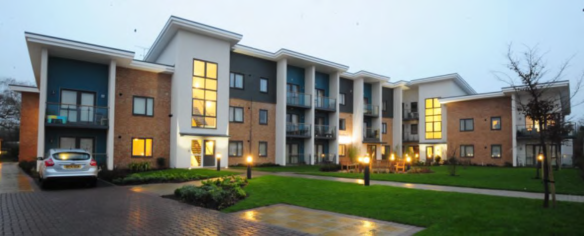
170.Planning policy must therefore understand the housing needs of particular groups and this is an important part of the Council’s duties under the Equality Act 2010, including the Public Sector Equality Duty. Comment
171.It is important that all older people have good and affordable housing choices. Not all older people need specialist accommodation; many will prefer to remain in their own homes. There is therefore a clear need to increase the supply of accessible and adaptable dwellings and wheelchair user dwellings as well as providing specialist housing. Comment
172.An important part of meeting need for older people will be through general purpose new homes built to accessible standards and which are suitable and attractive for ‘downsizing’. This will include ‘age-restricted general market housing’ designed for people aged 55 and over and the active elderly which may include some shared amenities such as communal gardens but does not include support or care services. Comment
173.This guidance supports the Council’s adult social care approach. Suitable general needs housing and specialist schemes both contribute to older and disabled people having good housing options. Extra Care, or Housing with Care can be very important in supporting a higher level of independence for longer and providing a more gradual transition as care needs increase. The support of a community and the informal provision of care by residents are also important. This brings long term benefits for both adult social care and the National Health Service. The policy also supports one of the priorities of the Birmingham and Solihull Sustainability and Transformation Partnership to improve the health and wellbeing of the population by working with local partners, particularly focussing on employment, education, housing and work. Comment
174.Extra Care or Housing with Care (use class C2) will provide fully self-contained homes to people who may need care at the time that they take up occupation or may develop a need for care over a period. People will have tenancies or leases which give them security of tenure and the right to control who enters their home. Schemes will have communal spaces and facilities, access to personal care and support 24 hours a day through an agency appropriately registered, community alarms and other assistive technologies and an office for use by staff serving the scheme. Comment
175.Care Homes will provide individual rooms (‘care bedspaces’) on a licence within a residential building. They will provide a high level of care meeting all activities of daily living. Personal care and accommodation will be provided together as a package with no clear separation between the two. This type of provision includes residential, nursing and dementia care. Care homes will be appropriately regulated for the purpose of ‘accommodation for persons who require nursing or personal care’. Comment
176.The population growth among adults aged 18-64 with disabilities is less pronounced than among older people, but the Council must develop affordable housing as an alternative to residential care. It is expected that this need will mainly be met by the Council directly commissioning the required provision. Comment
177.Applicants for planning permission should seek pre-application advice to establish whether their proposal will be classified as use class C2 or C3. Comment
Housing Mix
Policy SMBC/HO6: Housing Mix - Market Housing Comment
- In assessing the housing mix on allocated sites, those situated within identified broad locations and major windfall development sites, the Council will, in negotiations with applicants, seek to secure market dwellings in accordance with the following mix:
- 1 or 2 bedrooms – 45%
- 3 bedrooms – 40%
- 4 or more bedrooms – 15%
- When considering housing mix in accordance with part 1 of this policy, the Council will have regard to:
- Site size;
- Current indicative Borough-wide needs assessments;
- The existing mix of market housing and local housing demand in the area;
- Accessibility to local services and facilities, and access to public transport in accordance with policies in this Local Plan and the NPPF;
- The economics of provision, including particular costs that may threaten the viability of the site;
- The need to secure a range of house types and sizes in the locality in helping to achieve socially balanced and mixed communities.
- Further detail and guidance for delivery of this policy will be set out in the Meeting Housing Needs Supplementary Planning Document.
Justification
178.The NPPF recognises the importance of creating mixed and balanced communities with new housing delivered to meet local needs. The recommended mix of market housing highlighted in the above policy is informed by the outputs of the 2026 HEDNA. Comment
179.The mix of market housing takes account of a range of factors, including modelled outputs and an understanding of the stock profile and the levels of under-occupancy and overcrowding across the Borough. It reflects the latest evidence on need for household types and sizes, so that market provision reflects local Borough demand and promotes and sustains mixed and balanced communities. Comment
180.The assessment of housing mix in the HEDNA is considered at a Borough wide level and is reflective of a similar mix of housing being expected in all areas. This will however be applied flexibly according to specific local characteristics, and the Council will work with Parish Councils and Neighbourhood Groups who produce more localised assessments of housing needs that draw recommendations around housing mix. The Council will also have regard to the size and nature of the site and character of the area and the existing mix and turnover of properties at the local level. Comment
181.Specific sites, such as town centre development, may result in a different mix of housing being delivered. This will have regard to market demands, economic viability and the nature of the site under consideration. Comment
182.The HEDNA indicates that continued demand for family housing can be expected from newly forming households whilst also showing that the focus of new market housing will be on 1- 2- and 3-bed properties. A mix focused on smaller family homes will also assist affordability, the delivery of market driven starter homes and increase opportunities for older households to downsize and allow turnover of existing larger family homes. Comment
183.The HEDNA also indicates a need for bungalows and indicates that these are likely to meet a particular need and demand in the market sector, with a particularly focus on 2-bedroom homes. Opportunities for bungalows should be designed into schemes were appropriate. Comment
184.The Council will monitor what is being built to ensure that a reasonable mix of market housing is provided across the Borough. In applying this policy, any room designated as a bedroom should comply with the criteria set out in the national space standards, in accordance with national policy. Comment
Houses in Multiple Occupation (HMOs)
Policy SMBC/HO7: Homes in Multiple Occupation (HMOs) Comment
- The development of purpose-built HMOs or the change of use of existing homes or non-residential properties to large HMOs will only be approved where:
- The proposal would not materially harm the character or appearance of immediate vicinity of the site;
- A significant HMO presence would not be created within the immediate vicinity of the site.
- The proposal does not result in unacceptable impacts on the amenity of neighbouring occupiers by way of noise and disturbance; Refuse and recycling storage; Overlooking, loss of privacy or overdevelopment of the site; and any other environmental impacts arising from the occupation of the property as an HMO.
- The proposal provides sufficient communal living, dining and kitchen facilities and amenity space as well as adequate access to natural light and ventilation.
- Appropriate refuse and recycling storage facilities are provided.
- Safe and convenient access is available to public transport and local services. and
- The proposal does not give rise to unacceptable impacts on highway safety, congestion, or parking stress within the immediate vicinity of the site.
- All applications for HMOs should be supported by a management plan to demonstrate how the property will be maintained and operated.
- Subject to the introduction of an Article 4 Direction removing permitted development rights for the change of use from Class C3 dwellinghouses to small HMOs (Class C4), all relevant changes of use will require planning permission and will be assessed against Part 1 and 2 of this Policy.
Justification
185.The Private Rental Sector (PRS) makes an important contribution to the Boroughs housing market, particularly for those people who cannot afford to buy, including those in affordable housing need. It therefore forms an important part of the Boroughs housing pathways and includes a variety of types of provision including HMOs. Comment
186.The Councils HEDNA (2026) considered the importance of the private rented sector in meeting the Boroughs housing needs and how it provides a well-established role in helping to ensure sufficient housing is accessible to all aspects of the population. In that respect, the HEDNA highlights that the HMO market forms another part of the lower-cost housing offer. Comment
187.The provision of HMOs is classified within one of two categories, falling within separate use classes: Comment
- Small HMOs (Use Class C4) – includes the conversion or development of homes to occupy up to 6 unrelated individuals.
- Large HMOs (Sui Generis) – includes the conversion or development of homes to occupy more than 6 unrelated individuals.
188.HMOs for 5 or more occupants are legally required to hold a licence under the respective legislation. This is managed separately to the planning process. Comment
189.The HEDNA indicates that within Solihull, 2025 data estimates that there are around 180 HMOs, with 102 licensed properties accommodating up to 618 occupants. It goes on to indicate that HMOs are distributed across all wards, although higher concentrations are evident in areas such as Elmdon, Bickenhill, Lyndon, Smith’s Wood and Chelmsley Wood. It is also acknowledged that it is difficult to robustly evidence the number of small HMOs due to the nature of permitted development rights and licencing requirements. Comment
190.Through a further detailed review of HMO activity in the Borough the Council are also aware that the number of planning applications, Building Control activity and licence applications have suggested an increase in the number of HMOs in recent years. This has triggered the Council to pass a motion in April and June 2026 that required investigation into the option of an Article 4 Direction covering ‘small HMOs’. This work remains ongoing, with the introduction of an Article 4 Direction being subject to legislative requirements and due process. Comment
191.Although private rented homes in general have very similar characteristics to those in home ownership, the introduction of HMOs often draws concerns from local communities for a variety of reasons. This is further recognised within the HEDNA that notes “while HMOs provide an important source of affordable accommodation for workers and smaller households excessive concentrations can affect local character and community balance”. Comment
192.The principal concerns raised through consultation on planning applications, engagement regarding the Local Plan and other community involvement processes include: Comment
- the loss of traditional family housing to shared accommodation or HMOs;
- the often-transient nature of residents hence impacting on community cohesion;
- the impact on the provision of local services;
- parking pressures;
- noise and disturbance; and
- the appearance and maintenance of properties.
193.The NPPF remains broadly quiet in relation to the consideration of HMOs. There is a specific expectation within NDMP HO1 that Local Plans should consider the needs of different groups, which includes “People who rent their homes”. NDMP HO5 then considers how specific needs can be met and requires Local Plans “to address the housing needs of different groups”. Again, this does not explicitly reference HMOs, however it is clear that this represents a specific area of housing need and consideration within the Borough. Policy HO9 makes reference to “Large-scale shared living accommodation”, however Annex B explicitly excludes HMOs from this definition. The council understands that HMOs are also not considered to fall within the NPPF definition of “Specialist community-based accommodation” (again as referenced in NDMP HO9) as such provisions appear to focus more towards accommodation with a degree of care or support. Policy SMBC/HO7 is therefore considered to compliment the NPPF and justified in supporting the local consideration of HMO applications across Solihull. Comment
194.It is important to note that the definitions of small and large HMOs relate to the number of persons and not bedrooms. As such any respective application considered under Policy SMBC/HO7 should, as part of a Planning Statement, clearly specify the number of known or expected occupants as well as the number of bedrooms. The Council would expect occupancy to be controlled by way of appropriately worded condition should any proposal be approved. Comment
195.In terms of the immediate vicinity of the site (as referenced in Policy SMBC/HO7), the Council considers this to relate to: Comment
- the street within which the property sits;
- any properties that immediately adjoin the site;
- the streets that immediately adjoin the application street;
- the streets that accommodate properties that immediately adjoin the application site.
- Any respective Conservation Area within which the application site is located.
196.Where the street in which the application property sits is particularly lengthy, consideration will be given to any notable change or variation in property design and street character etc when considering what constitutes a reasonable interpretation of the immediate vicinity. Comment
Homes for Children we Care for
Policy SMBC/HO8: Residential Accommodation for Looked after Children Comment
- Proposals for children's homes, supported accommodation and other residential accommodation for children we care for and care leavers (including new build accommodation or changes of use) will only be approved where:
- The proposal will retain the appearance and function of the property as a residential home.
- The proposal would not materially harm the character or appearance of the immediate vicinity of the site.
- A materially adverse concentration of properties providing care provision would not be created within the immediate vicinity of the site.
- The proposal does not result in unacceptable impacts on the amenity of neighbouring occupiers by way of noise and disturbance; Refuse and recycling storage;
- Overlooking, loss of privacy or overdevelopment of the site; and any other environmental impacts arising from the occupation of the property as a home to provide care for looked after children.
- The proposal provides sufficient communal living, dining and kitchen facilities and amenity space; adequate support space for care providers; and adequate access to natural light and ventilation.
- Appropriate refuse and recycling storage facilities are provided.
- Occupiers will have reasonable access to schools, healthcare, recreation facilities, community facilities, public transport and other services appropriate to their needs; and
- The proposal does not give rise to unacceptable impacts on highway safety, congestion, or parking stress within the immediate vicinity of the site.
- All applications considered under this policy must be supported by an appropriate management plan to demonstrate how the property will be maintained and operated.
- Particular support will be given to proposals that help address identified shortages within Solihull Borough for specialist, complex needs. This should have regard to the Councils Children’s Social Care Sufficiency Strategy and be secured through the management plan required by part 2 of this policy.
Justification
197.The Council has a statutory duty under Sections 22A-22G of the Children Act 1989 to improve outcomes for the children and young people we care for. A key part of that is securing sufficient accommodation for children and young people and includes ensuring, so far as reasonably practicable and wherever consistent with a child's welfare, that accommodation is available within the local authority area. This is known as the sufficiency duty and forms the basis for the respective reference within the new NPPF (2026). This also helps enable children to remain connected to their families, education, social networks and support services. Comment
198.National planning policy recognises the importance of accommodating children who require social care support. NDMP HO1 is clear that planning authorities should assess the accommodation needs of looked-after children and support proposals which respond positively to identified local needs. In that respect the HEDNA draws on information provided by the Councils 2025-2029 Children's Social Care Sufficiency Strategy, the Children’s Social Care Sufficiency Strategy Delivery Plan report presented to the Cabinet Member for Children and Education (January 2026), the Delivery Plan appendix, and the Q4 2024/25 update to the Children Looked After Strategy. Comment
199.The HEDNA indicates that at 31st March 2025, only 22 per cent of the beds in independent children's homes located within Solihull were occupied by Children cared for by Solihull, meaning that approximately four-fifths of the Borough's residential capacity is meeting the sufficiency duties of other local authorities. Conversely, of the 39 Solihull children in external residential care, the majority were placed outside the Borough, and 11 children stepped up from a fostering placement to a children's home during 2024/25 — a reflection of complexity of need and the shortage of specialist local provision. During the first half of 2026 however, there have been no moves from fostering to children’s homes, a reflection of the work across the Borough to recruit specialist foster carers and to stabilise fostering arrangements. Notwithstanding, whilst the evidence continues to indicate a need it also points to a significant mismatch between the location of homes in Solihull and the children they accommodate. Comment
200.The Councils in-house portfolio will accommodate only a minority of the 39 children currently placed outside the Borough. This therefore suggests an existing need between 2025 and 2029 of c30 additional bedspaces to meet local need. Given the timeframe of this specific aspect of local housing need however and given the wider growth pressures within the Borough this figure may fluctuate during the plan period. Future iterations of the Councils Children's Social Care Sufficiency Strategies will clearly indicate rolling levels of need across the Borough having regard to the most up to date information (in accordance with NDMPs HO1 and HO7). The updates to the Sufficiency Strategy will also continue to monitor the significant work already underway to develop relationships with providers already registered in Solihull as well as new providers registering with Ofsted. It will also reflect the ongoing drive to reduce the number of children we care for and to reduce even further the numbers of children living in children’s homes. Comment
201.Where need for children’s homes remains however, the HEDNA points towards further increasing complexity of need amongst those requiring residential care. The evidence demonstrates particular needs for: Comment
- specialist children’s homes for children and young people with more complex needs, including ASD, LD and with mental health presentations;
- small-scale children’s homes that enable children to live closer to their communities and support networks;
- homes that assist transitions from residential care to greater independence;
- homes that reduce reliance on out-of-Borough care arrangements.
202.The Council will therefore seek to ensure that additional provision is aligned with locally identified sufficiency needs and contributes positively to the delivery of appropriate accommodation for Solihull children and young people. This will be achieved through collaborative working between the Council's Planning and Children’s Services, having regard to ongoing reviews of the Councils Sufficiency Strategy and monitoring of existing supply relative to identified need. Comment
203.In that respect, the Borough has seen a significant uplift in planning consents granted for small scale children’s accommodation. This now, more than meets the local need requirement. At this time though many of these permissions are yet to be brought into use and are without Ofsted registration. It is this supply pipeline that the Council will keep under regular review relative to local needs. Comment
204.In accordance with Policy HO9, proposals for new children's homes should be provided in locations that offer a safe and supportive environment, access to services and opportunities, and which maintain the domestic and community-focused character expected of a family home. The Councils policy is intended to complement (not duplicate) NDMP HO9 having regard to local need and circumstances. Comment
205.Whilst not strictly a material planning matter (in accordance with NDMP DM7) the Council also recognises the importance of Ofsted registration advice and in particular the specific requirement to engage early with Childrens Services to identify specific needs and requirements. The Council considers this particularly important and relevant given the evidence pointing towards specific areas of specialist need. The Council would also strongly encourage early engagement with local communities to help manage the integration of services, the preparation of a more effective management plan and maintenance of community cohesion. Comment
206.In determining planning applications, the Council will consult Children's Services regarding identified sufficiency needs, existing local provision and the strategic priorities contained within the Council's Children's Care Sufficiency Strategy. The Council will maintain an up-to-date evidence base to inform decisions and will support proposals that contribute towards meeting identified needs for local children and young people while avoiding undue concentrations of provision within particular neighbourhoods. Comment
207.The provision of a management plan to support proposals considered under this policy is reflective of the requirements under NDMP HO9. In order to ensure ongoing compliance, the Council would expect to include a condition regarding the management plan to any planning consent. This will be particularly important where the proposal includes specialist, complex needs, including ASD, LD and with mental health presentations. Where possible the Council would also encourage disclosure of the intended provider who would be registering with Ofsted to help build early working relationships. The Council would expect occupancy numbers for children in care and the type of provision (where appropriate) to be controlled by way of condition should any proposal be approved. Comment
208.In terms of the immediate vicinity of the site (as referenced in Policy SMBC/HO8), the Council considers this to relate to: Comment
- the street within which the property sits;
- any properties that immediately adjoin the site;
- the streets that immediately adjoin the application street;
- the streets that accommodate properties that immediately adjoin the application site.
- Any respective Conservation Area within which the application site is located.
209.Where the street in which the application property sits is particularly lengthy, consideration will be given to any notable change or variation in property design and street character etc when considering what constitutes a reasonable interpretation of the immediate vicinity. Comment
210.When considering the cumulative impact and concentrations of children’s care provisions the council will have regard to whether the cumulative presence of such provisions within the immediate vicinity has resulted in materially different activity patterns, staff movements and service visits, such that the area no longer functions as a typical family residential environment. This will be considered on material planning grounds and may therefore differ to considerations made in relation to Ofsted registrations. Comment
Gypsy & Traveller Accommodation
Policy SMBC/HO9: Provision of Accommodation for Gypsies and Travellers Comment
- The Council will meet the identified need for 50 additional permanent residential pitches to 2043 as set out in the 2026 Gypsy and Traveller Accommodation Assessment (GTAA). This also includes an allowance for ‘undetermined’ households where it was not possible to complete an interview during the completion of the GTAA.
- This total need of 50 pitches is divided into 5-year periods as follows:
- Years 0-5 (2026-30): 23 pitches
- Years 6-10 (2031-35): 9 pitches
- Years 11-15 (2036-40): 11 pitches
- Years 16-18 (2041-43): 7 pitches
- The need will be met through a combination of:
- Unimplemented planning consents and vacant pitches-
- The intensification or appropriate reasonable extension of existing authorised Gypsy and Traveller sites; and -
- An updated Gypsy and Traveller Site Allocations Plan
- 4 The following criteria will be used in the allocation of future sites and subject to compliance with other policies in the plan and the NPPF, applications which perform well against the criteria, and which contribute to meeting any identified unmet need, will be considered favourably:
- The size and scale of the site and the number of caravans stationed is appropriate to the size and density of the local settled community, having regard to factors such as the scale and form of existing pitches and sites in the locality, and the availability of infrastructure, services and facilities;
- Any unacceptable adverse visual impact can be adequately minimised;
- The site is not in an area prone to flooding;
- Any unacceptable adverse impact on landscape or local nature conservation designations, ecology, biodiversity, water quality, or the historic environment can be mitigated;
- There is no unacceptable adverse impact on privacy and residential amenity for both site residents and neighbouring land uses, and the site will provide safe and healthy living conditions for site occupants;
- The site has safe and convenient access to the highway network;
- The site is of a sufficient size to support the provision of amenities and facilities for the number of caravans proposed, and will have adequate circulation space within the site for the parking and safe manoeuvring of vehicles and trailers;
- Local services and facilities such as schools, health facilities, fresh food and employment are accessible by walking, cycling and public transport, or it can be demonstrated that the site is sustainable in other ways.
- Applications to intensify or extend existing authorised Gypsy and Traveller Sites that will contribute to meeting the need identified in the 2026 GTAA will also be supported where they meet the above criteria.
Policy SMBC/HO10 - Safeguarding Gypsy and Traveller Sites. Comment
- The Gypsy and Traveller sites identified and safeguarded in the 2014 Gypsy and Traveller Site Allocations Plan will continue to be safeguarded for Gypsy and Traveller accommodation purposes for the duration of this Plan.
- These sites make an important contribution towards meeting accommodation needs and maintaining an appropriate supply of authorised pitches within the Borough.
- Development proposals that would result in the loss of safeguarded pitches, whether through redevelopment, change of use, or any other means, will not be permitted unless it can be demonstrated that the site is no longer required to meet identified needs and that suitable alternative provision has been secured.
- The safeguarded sites as shown on the Policies Map will be protected to ensure their continued availability for Gypsy and Traveller accommodation.
Justification
211.Gypsies and Travellers in England have some of the worst outcomes of any group across a range of social indicators. It is well recognised that they are amongst the most socially excluded groups in society and research has consistently confirmed the link between the lack of good quality sites for Gypsies and Travellers and poor health and education. Accommodation issues contribute to many of the inequalities that Gypsy and Traveller communities experience and are frequently a source of tensions between travelling and settled communities. The Government and the Council acknowledge that these inequalities and tensions must be addressed, but it is crucial to ensure that the planning system is not abused and that development is located in the most appropriate locations. Comment
212.Given the historic lack of suitable and available land outside the Green Belt for new Gypsy and Traveller sites, applications to intensify or reasonably extend existing authorised Gypsy and Traveller Sites that contribute to meeting need identified in the 2026 GTAA will be supported where they meet the criteria set out in the Policy. This will ensure the effective use of land and optimise the use of existing sites. It will also have social benefits as many Gypsy and Travellers wish to live in extended family groups. Comment
213.A number of Gypsy and Traveller sites were allocated through the 2014 Gypsy and Traveller Site Allocations Plan to help meet identified accommodation needs within the Borough. As part of that process, a number of sites that were located within the Green Belt were removed from the Green Belt through alterations to the Green Belt boundary and allocated specifically for Gypsy and Traveller use. Whilst some of these sites have subsequently been developed, some have not and it is important that they all remain available for use by Gypsies and Travellers as an option to help meet identified need. Comment
214.The Council considers it appropriate to retain these sites as safeguarded Gypsy and Traveller sites within this Local Plan. Their continued protection will help ensure that the existing supply of authorised pitches is maintained and that the Borough is able to support the accommodation needs of the Gypsy and Traveller community over the plan period. The boundaries of all safeguarded sites are identified on the Policies Map. Comment
[19] The only exceptions to that are where the broad location areas overlap with: specific sites that are proposed for allocation; specific sites that already have planning consent; or where land is situated within the existing built form of Tidbury Green due to the village being inset from the Green Belt.
[20] ONS as published March 2026
[21] ONS as published March 2026
[22] The affordability ratios for 2022 (9.15), 2023 (7.74), 2024 (9.44), 2025 (8.62) and 2026 (7.75).
[23] Using the standard method as follows: ((8.54-5) / 5) x 0.95
[24] This covers the period the Housing Delivery Test results have covered.
[25] Paragraph 012 (Reference ID: 68-021-20190722)
[26] Comprised of 1,600 units at Mell Square and 469 at Eastgate.
[27] Of these 1,600 units, 574 have now got detailed consent, either because they were approved in full as part of the hybrid application, or they have subsequently been granted reserved matters approval.
[28] For example, Land at Rumbush Lane, Tidbury Green and Land at Gentleshaw Lane, Solihull have been approved on the basis of Grey Belt policy, whilst land at Stratford Road in Hockley Heath has been approved on appeal.
[29] This relates to Green Belt sites but not including those that were included as allocations in the 2020 plan.
[30] 2028 to 2043.
[31] This table includes allocations which have not received planning permission by 31st March 2026. A number of sites noted here have since received the benefit of planning permission and these are described in the settlement chapters.
[32] This also allows for a discounted rate of 517 dwellings for non-delivery of existing consents.
