Draft Submission Plan (Regulation 19)
Delivery Comment
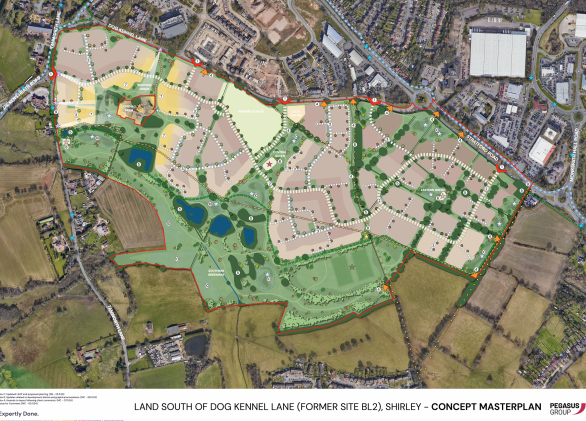
Comprehensive Development
441.In order to support the delivery of sustainable development the importance of embedding a strong masterplanning framework within the Local Plan cannot be underestimated. The NPPF (2026) defines masterplans as “a flexible, placemaking tool, providing a three-dimensional spatial framework and long-term vision for the development or regeneration of area-specific or site-specific locations”. This is specifically supported by the NDMP DP3 which sets out Key principles for well-designed places. Comment
442.The purpose of this policy is not to duplicate the requirements of National Development Management Policies, including NDMP DP3, or other national policies relating to design, placemaking and sustainable development. Instead, it seeks to ensure that major development is planned and delivered comprehensively, particularly where proposals come forward as individual phases or parcels within a larger allocation or broad location. The local plan policy therefore focuses on the process, coordination and evidential requirements associated with comprehensive development rather than repeating national policy tests. Comment
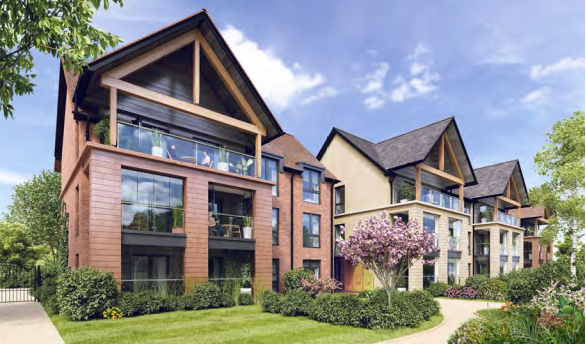
443.A comprehensive masterplanning approach helps secure coordinated infrastructure provision, appropriate developer contributions, effective integration between development phases, and meaningful community involvement. Where applications are submitted for only part of a larger site, applicants will be expected to demonstrate that the proposal contributes positively to the delivery of the wider area and does not prejudice future development opportunities or infrastructure requirements that could limit or restrict the wider delivery of new development within the Borough. Comment
444.This approach allows flexibility in how development is brought forward whilst ensuring that individual applications contribute to an agreed strategic vision for the whole site and its surrounding communities. Comment
445.Where necessary applicants will be expected to engage with neighbouring landowners and site promoters to support the requirements of this policy. Where that is physically not possible then the applicant should clearly demonstrate the efforts made to engage with neighbouring landowners and promoters and evidence why effective results have not been possible. Comment
446.The cumulative impacts of development will continue to be assessed as part of the consideration of individual planning applications where necessary. Comment
Policy SMBC/D1: Comprehensive Masterplanning for Strategic and Major Development Comment
- Proposals for major development on allocated sites, broad locations or areas identified for significant growth shall be brought forward in accordance with a comprehensive masterplanning approach which demonstrates how the development will support, contribute to and achieve the coordinated, sustainable and comprehensive delivery of the wider site or broad location.
- Planning applications for all or part of such sites shall be accompanied by sufficient information to demonstrate how the proposal:
- Accords with an approved masterplan or, where no masterplan has been approved, contributes towards a comprehensive framework for the development of the wider site or area;
- Supports rather than prejudices the planned delivery of adjoining land, later development phases or associated development;
- Incorporates, safeguards or enables the timely provision of necessary infrastructure, services, facilities, movement networks, green infrastructure and utilities required to serve the wider development;
- Delivers, or makes appropriate contributions towards, necessary infrastructure and mitigation measures (as indicated by site specific policies, the IDP or other appropriate supporting plan or strategy) reasonably related to the cumulative development of the wider site or area;
- Provides for the comprehensive integration of land uses, access arrangements, movement corridors, public spaces, landscape structure and environmental enhancements across the wider development area; and
- Demonstrates how community and stakeholder engagement has informed the evolution of proposals and how relevant matters raised have been taken into account. This should involve clear engagement with neighbouring landowners and promoters (as appropriate).
- In addition to the requirements outlined in Part 2 of this policy, where an application relates to only part of a larger allocation, site or broad location, the applicant shall provide proportionate evidence demonstrating:
- The relationship of the application site to the wider developable area;
- How the proposal will not compromise the efficient and comprehensive development of the remaining land;
- How infrastructure requirements, planning obligations and delivery responsibilities have been considered across the wider site; and
- The mechanisms by which future phases or adjoining land can be integrated with the proposed development.
- Development proposals that would prejudice, fragment or otherwise compromise the comprehensive planning and coordinated delivery of a wider site, allocation or broad location will not be supported.
Infrastructure Delivery
447.Paragraph 35 of the NPPF sets out the expectation that development plans should set out the contributions expected from developments. The policy below is included to fulfil this expectation. Comment
448.In addition to this policy, developer contributions and infrastructure provision are also likely to be tested against Regulation 122 of the Community Infrastructure Regulations (2010) (as amended) which includes the following: Comment
“planning obligation may only constitute a reason for granting planning permission for the development if the obligation is:
- necessary to make the development acceptable in planning terms;
- directly related to the development; and
- fairly and reasonably related in scale and kind to the development.”
449.The approach under this local policy recognises and supports NDMP HC3 (Community facilities and public service infrastructure serving new development). Comment
Policy SMBC/D2: Infrastructure Provision and Developer Contributions Comment
- Major Development will be expected to provide, or contribute towards, provision of:
- Measures to directly mitigate its impact and make it acceptable in planning terms
- Physical, social, green and digital infrastructure to support the needs associated with the development.
- Infrastructure and mitigation measures will be provided in a timely manner to support the objectives of the Local Plan.
- The Council will, where appropriate, seek to secure site-specific measures through planning obligations. The nature and scale of any planning obligations sought will be related to the form of development and its potential impact on the site and surrounding area. The cumulative impact of developments will also be taken into account.
- The Plan has been subject to a Viability Assessment, to ensure the policies are deliverable. In the exceptional circumstances where site -specific issues generate viability concerns, applicants should discuss these with the Council at the earliest possible stage in the development process. Proposals that are unable to comply with the Plan’s policies on viability grounds must be accompanied by a detailed Viability Assessment.
- Developer contributions in the form of the Community Infrastructure Levy will contribute towards strategic infrastructure required to support the overall development in the Local Plan. An element of CIL will, where appropriate, also be utilised to deliver local infrastructure requirements in accordance with Neighbourhood Plans, in accordance with CIL legislation.
- Contributions secured through planning obligations may be pooled to address need or cumulative impacts arising from more than one development proposal. The Infrastructure Funding Statement will inform decision making on the use of planning obligations.
- The Council will work in partnership with infrastructure providers and other delivery agencies in updating the Infrastructure Delivery Plan.
- Whilst minor developments are less likely to contribute towards developer contributions, requests may still be sought where the proposal has a specific impact upon local infrastructure that requires mitigation in order to make it acceptable in planning terms.
- To support the efficient and sustainable delivery of infrastructure as part of relevant planning applications the Council will seek a monitoring fee contribution reflective of the sites size and capacity.
450.The paragraphs below set out the known infrastructure requirements that will need to be taken into account within development proposals in accordance with the above policy. Comment
Affordable Housing
451.The Council’s approach to the provision of affordable housing is set out in the chapter “Delivering a Sufficient Supply of Homes” chapter and is referenced here just for completeness. Comment
Education
452.Most major residential developments result in new homes that are occupied by families with early years or school age children, and this usually places additional demand on schools and early years providers in the vicinity of the site. To address this demand the Council, as education authority, will assess capacity at existing schools/provision and, where necessary, will seek commuted payments to be used to increase the capacity at appropriately located schools/provision. This will be done in a proportionate manner taking into account the DfE's pupil yield dashboard and revised guidance on Developer Contributions for Education (August 2023). The approach is set out in the Education Sufficiency Strategy (2025 to 2028) and the Council’s approved Developer Contributions for Education Policy approved in January 2024. Comment
453.The policy calculates education contributions by: Comment
- Estimating pupil yield[37] from developments using the DfE pupil yield methodology;
- Separately assessing impacts on:
- Early Years
- Primary
- Secondary
- Post-16
- SEND provision; and
- Applying a cost per place to determine the required contribution.
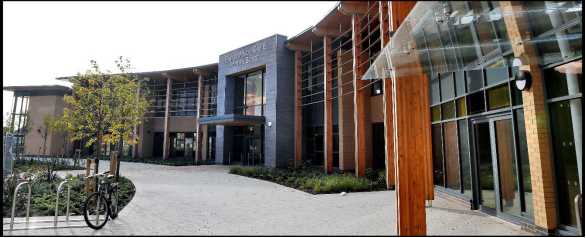
454.Within the settlement chapters, more locally specific commentary is given to education infrastructure requirements, including where the scale and location of expected growth will result in the need for a new school to be provided. Comment
Education Transport
455.Whilst accessibility of new developments will be taken into account to determine whether a particular development would be located in a sustainable location or not, there may be occasions where dedicated school transport may be required. Comment
456.A contribution may be sought where: Comment
- The development is located beyond the statutory walking distance from the relevant school and pupils generated by the development would be entitled to Council-funded transport.
- The statutory walking distance is exceeded, namely:
- 2 miles for children under 8 years old.
- 3 miles for children aged 8 and over.
457.The contribution is based on the number of eligible pupils generated by the development × the transport cost × the relevant number of school years. Comment
458.Even where a development is within the statutory walking distance, if there is no safe walking route, the Council may seek a contribution towards highway works to create a safe route to the relevant school or a transport contribution. Comment
Healthcare
459.The Council has been working with the Birmingham and Solihull Integrated Care Board (BSOL ICB) to assess the healthcare infrastructure needed to support new development. This has included the development of a model that predicts the likely additional health care engagements/activity that would be generated by a development and converts this into the space required to deliver the additional activity. An assessment is then undertaken to determine whether there is any spare capacity in the area. If not, the space required to provide the additional activity is converted into a cost that is then used to identify an appropriate and proportionate commuted sum. Comment
460.The model considers the impact of development on the following healthcare sectors: Comment
- Primary Care.
- Community Care.
- Mental Health.
- Acute Outpatients.
- Acute Emergency.
461.BSOL ICB have confirmed that they will then work directly with healthcare providers (be they GP practices and/or hospital trusts) to determine how such funds will be deployed to ensure that appropriate capacity improvements are undertaken to the healthcare estate to facilitate the additional demands arising from the development. Comment
462.The Council believes that by engaging with BSOL ICB on this basis allows for a single, coordinated and consistent approach to be taken for developments across the Borough rather than engaging with individual healthcare providers. This approach recognises the ICB’s role to coordinate and plan for service delivery rather than directly providing that service. Comment
463.It should be stressed that this approach seeks to identify the physical infrastructure needed to support the development and does not include the operational or on-going revenue costs of actually proving the service (for example where any additional GPs need to be provided) as it is considered that this is more appropriately funded through general taxation that will be generated in the area as a result of the new development/residents. Comment
Playing Pitches & Sport Hubs
464.As noted in an earlier chapter, the Council’s Playing Pitch and Outdoor Sports Strategy (December 2023) and associated Playing Pitch Assessment identifies that additional playing pitch demand will arise as a result of new developments[38]. This strategy is the current Sport England-compliant evidence base that the Council should use when seeking playing pitch and outdoor sports contributions through planning obligations and when assessing the impact of Local Plan growth. Comment
465.In assessing the quantum of additional need that may arise, the Council has used Sport England’s Playing Pitch calculator. This is then used to calculate a proportionate and appropriate contribution that will be used to provide additional facilities. Comment
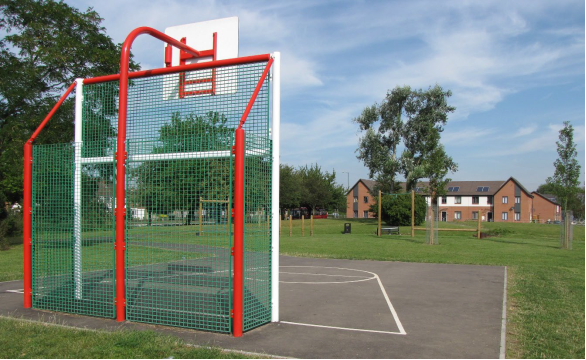
466.The Council is seeking to pool these contributions at a settlement level that will then be used to bring forward sports hubs that will be larger more sustainable facilities than had new facilities been provided in a more dispersed and isolated fashion with smaller facilities. A pooled approach will help ensure that contributions are sufficient to deliver strategic facilities capable of meeting demand generated by multiple developments and serving wider communities. This may include associated ancillary infrastructure such as changing accommodation, parking, access arrangements, lighting, and other supporting facilities where appropriate. Comment
467.Hub locations will be pursued to serve new developments at the following locations: Comment
- Balsall Common
- Blythe
- East of Solihull.
- Knowle
468.At this stage specific sites for these hubs have not yet been identified as more work will need to be undertaken when the actual level of growth for each location is understood through the adoption of this plan and the determination of speculative applications that is expected to occur before the plan is adopted. It is the level of growth that will determine the size of each hub, and therefore the land required to support its delivery. Comment
469.Whilst these broad locations have been identified, the precise location, scale and form of provision may evolve as further evidence, masterplanning and development proposals come forward. Comment
470.Delivery of sports hubs will be pursued in partnership with Sport England, National Governing Bodies, sports clubs, schools, community organisations, and other relevant stakeholders where appropriate. The delivery of these hubs will play a key role in mitigating the impacts of growth and ensuring that new and existing communities have access to sufficient, high-quality sports and physical activity infrastructure throughout the plan period. Comment
Public Transport
471.Whilst accessibility of new developments will be taken into account to determine whether a particular development would be located in a sustainable location or not, there may be occasions where public transport enhancements are required to enable access to developments by means other than the private car. Comment
472.This will be assessed on a site-by-site basis and may result in the need for commuted sums to be used toward enhancing public transport that can be used to serve the site. This could include enhancements to bus services and/or measures to improve the accessibility of rail services and in doing so will work with public transport providers in doing so. Comment
Travel Plans
473.The need for travel plans is often identified through the transport assessments prepared for major developments. Where this does illustrate the need for a travel plan the Council is open to the developer taking on responsibility for the delivery of the plan, or if requested the Council will do so. In these instances, this will generate the need for commuted sums to cover the delivery costs. Comment
Police
474.The Council will work with the West Midlands Police & Crime Commissioner to seek to identify, where justified, infrastructure improvements that may be necessary as a result of additional development occurring in an area. These infrastructure improvements will not be expected to cover operational or revue related matters that are, like health services, more appropriately funded through general taxation that will be generated in the area as a result of the new development/residents. Comment
475.Measures could include physical infrastructure (such as charging points for vehicles and/or welfare facilities for officers when working remotely from a permanent base. Comment
Other Potential Infrastructure
476.The above infrastructure needs should not be considered as a closed list, as other examples may come forward during the plan period. Where this occurs the Council will set out a justification for any additional payments using the principles of necessity and proportionality that are included in the Regulation 122 tests. Comment
Monitoring Fees
477.In addition to the above, the Council will also include a monitoring fee in relation to relevant planning obligations. In setting the monitoring fee the Council will ensure that these will be set based on the following considerations: Comment
- The sum to be paid fairly and reasonably relates in scale and kind to the development; and
- The sum to be paid to the authority does not exceed the authority’s estimate of its cost of monitoring the development over the lifetime of the planning obligations which relate to that development.
Recent Experience
478.Since the end of 2024 the Council has been determining a number of major residential developments on sites (including sites within the Green Belt) and has been seeking appropriate section 106 obligations. These have included the types of infrastructure contribution listed above. On at least one occasion, most of these contributions have also been included in a planning permission granted on appeal[39]. This is highlighted to demonstrate that the Council’s approach to date has been in accordance with the regulations that require such contributions to be necessary; directly related to the development; and fairly & reasonably related in scale and kind to the development. Comment
479From the last quarter of 2024 until mid-2026, at least 14 major residential developments have been granted planning permission which include proposals for up to 3,700 dwellings. The associated S106 agreements to these applications make provision for up to £44 million in commuted sums to be collected and used to address the infrastructure improvements noted above. Some of these developments have not commenced, and some will have a range of trigger points/phasing that will influence when the monies are actually paid. As payments are made these will be reported in the Council’s annual Infrastructure Funding Statements. Comment
Monitoring
480.The Council will develop a monitoring framework following adoption of this plan. Comment
[37] For instance, a site of 100 dwellings (40% of which would be affordable) would result in a pupil yield of 34 for primary school and 18 for secondary schools.
[38] This is in addition to any replacement playing pitches may be required in connection with developments that may take place on existing facilities, and thus the replacement pitches are required as mitigation.
[39] For instance, the development of 80 dwellings on land west of Stratford Road (Hockley Heath) (appeal reference: 6005246) (planning application reference PL/2025/01366/PPOL)
